Welcome to Changsha Mining Equipment Co., Ltd.
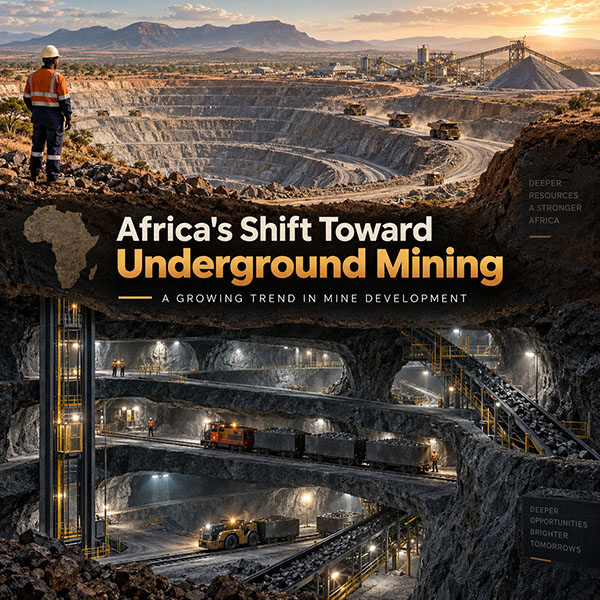
Africa’s Shift Toward Underground Mining: A Growing Trend in Mine Development
Africa remains one of the world's most important mining regions, with major resources of gold, platinum group metals, diamonds, copper, uranium and other critical minerals. While much of the continent's production has traditionally come from open-pit operations, several recent projects show that underground mining is becoming increasingly important as companies look to extend mine life and access deeper ore bodies.
One of the clearest examples is Tharisa's PGM and chrome mine in South Africa. In September 2026, the company provided an update on its phased transition from open-pit to underground mining. Open-pit production is expected to continue while underground development advances, with the underground project designed to unlock more than 60 years of additional mining potential.
The project reflects a broader challenge facing mature mines. As an open pit becomes deeper, stripping requirements and haulage distances increase. At some point, expanding the pit may become less economical, while valuable ore still remains below the surface. For suitable deposits, underground development can provide a way to access these deeper resources and extend the productive life of existing mines.
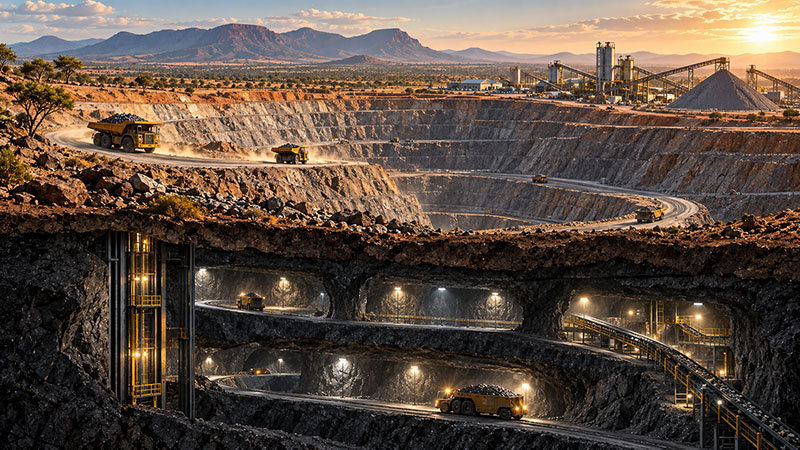
South Africa is not the only example. The Qala Shallows gold project near Johannesburg is being developed as a long-life underground operation, with a planned mine life of 17 years. In Botswana, Lucara Diamond is advancing the Karowe underground project to access the highest-value portion of its diamond orebody and extend the mine's operating life to 2038.
Further north, Niger's Dasa uranium project is another example of new underground mine development. Underground work has already progressed through several levels, while the project recently received approval for up to US$414 million in U.S. government-backed financing.
Although each project has different geology, mining methods and investment drivers, together they show that underground development remains an important part of Africa's mining pipeline.
Why Underground Mining Is Gaining Attention
The move underground is not simply a matter of replacing open-pit mining. In many cases, the two methods can operate in parallel during a transition period.
Several factors can encourage underground development, including deeper ore bodies that are increasingly difficult to access economically from surface, higher stripping ratios in mature open pits, the need to extend mine life, and the value of existing processing plants and infrastructure.
This trend is also connected to the wider global focus on mineral supply. Africa holds significant resources of copper, cobalt, manganese, uranium and other minerals that are increasingly important to energy, infrastructure and advanced manufacturing. At the same time, governments and international investors are paying more attention to exploration, mine development and local mineral processing across the continent.
As investment continues, more projects may move from exploration into mine development, while existing operations continue to evaluate deeper resources.
However, moving underground also creates a different set of technical challenges.
Underground Mines Need Different Material-Handling Systems
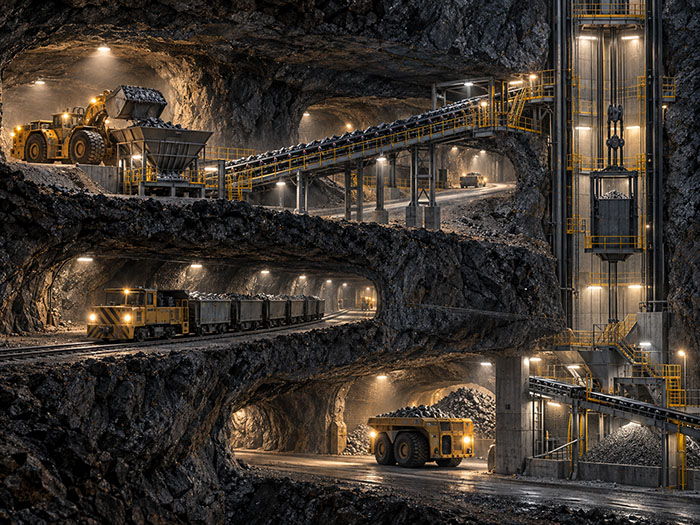
Compared with open-pit operations, underground mines work within much tighter physical constraints. Tunnel dimensions, gradients, ventilation, turning space and haulage distance all influence equipment selection.
Once rock is drilled and blasted, it must be loaded, transported through underground workings and transferred to the next stage of the production process.
Depending on the mine design, this may involve trackless equipment, rail haulage, mine cars, loading equipment, winches or a combination of several systems.
There is no single solution that fits every underground mine.
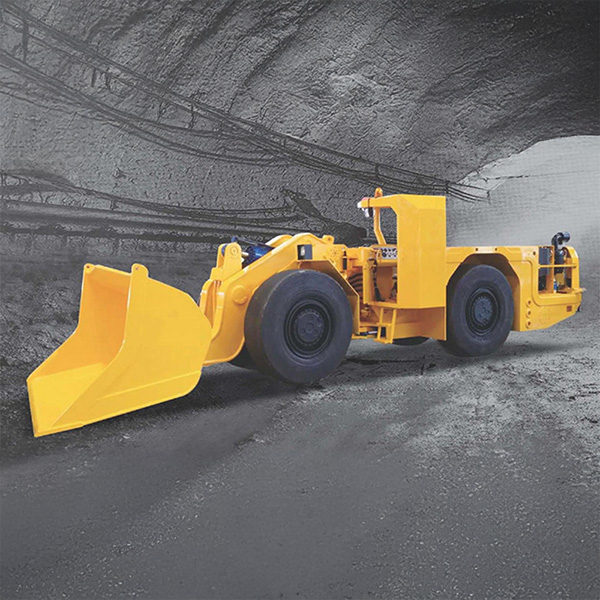
Large mechanised operations may rely heavily on underground trucks and load-haul-dump equipment. Other mines, especially those with fixed haulage routes or smaller tunnel profiles, may use rail-based haulage systems.
For mine operators, the key issue is therefore not simply choosing an individual machine. The entire loading and transportation system needs to match the mine layout, production target, tunnel dimensions, gradient and expected operating conditions.
What This Means for Mining Equipment Suppliers
Africa's underground mining trend creates opportunities, but it also raises expectations for equipment suppliers.
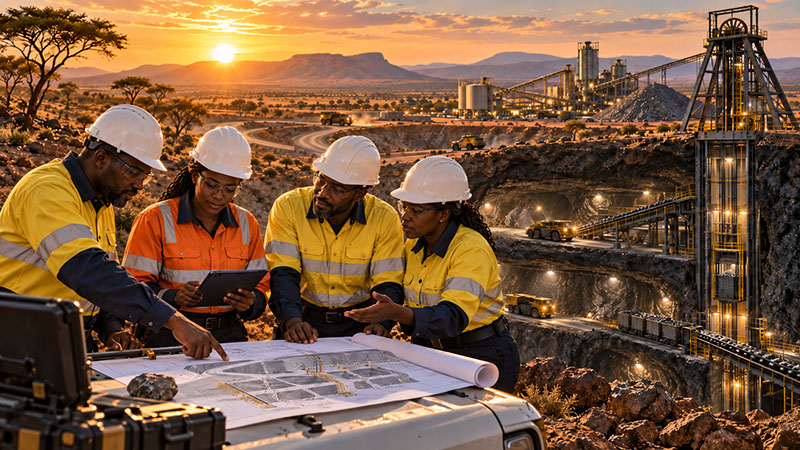
Mining companies increasingly need suppliers that can understand the complete operating environment rather than simply quote a standard machine. Technical parameters such as roadway size, haulage distance, gradient, rail gauge and target capacity can significantly affect equipment selection.
For suppliers of underground loading, haulage and hoisting equipment, the focus should therefore be on system matching, reliability and practical technical support.
The development of projects such as Tharisa, Qala Shallows, Karowe and Dasa does not mean that every African mine will adopt the same mining method or equipment configuration.
What these projects do show is that deeper mine development is becoming an important part of Africa's mining future.
As more operators look below the limits of existing open pits, efficient underground development and material-handling systems will remain an important consideration for the African mining industry.
Sabrina He | Mining Machinery Specialist
With over 14 years of experience in the mining equipment industry, Sabrina He specializes in machinery selection, technical troubleshooting, and plant optimization.