Welcome to Changsha Mining Equipment Co., Ltd.
7 Safety Features to Consider When Choosing an Underground Mine Locomotive
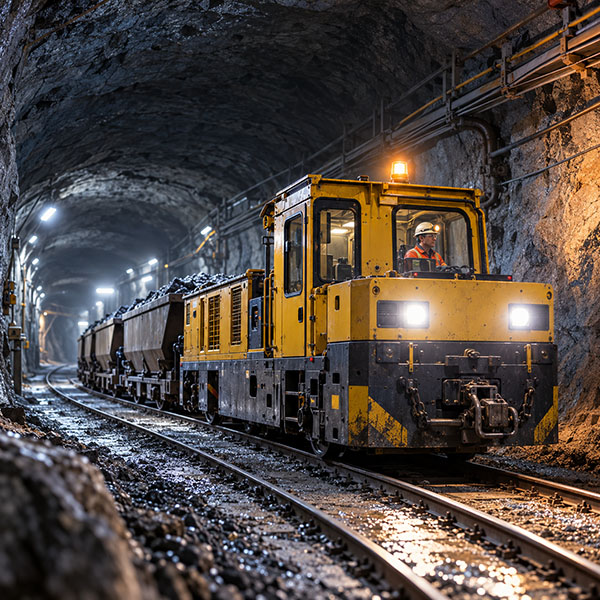
An underground mine locomotive does more than move ore, supplies, and equipment. It operates in confined tunnels where visibility, track conditions, gradients, and frequent starts and stops can affect every haulage trip. Choosing a locomotive solely by price, motor power, or nominal traction capacity may overlook important operational requirements.
For mine owners, engineers, and procurement teams, a safer purchasing decision starts with understanding how the locomotive will be used. The following seven considerations can help you compare battery-electric and trolley locomotives, ask suppliers better questions, and select equipment suited to your underground railway.
1. Reliable Braking and Stopping Control
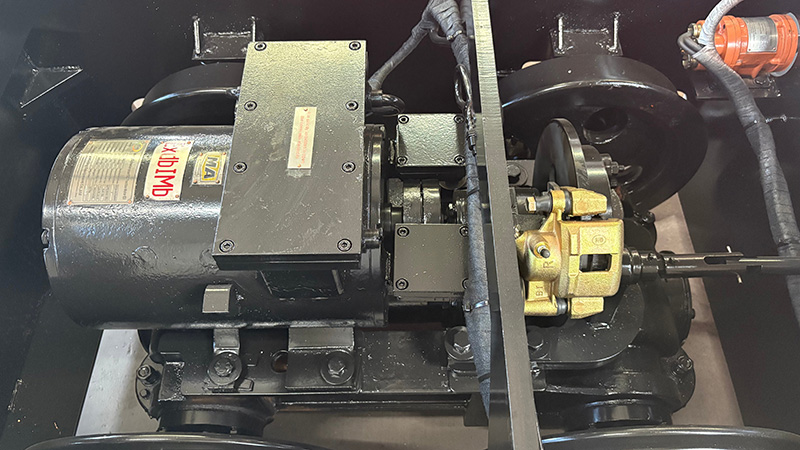
Braking performance should be one of the first specifications you discuss. A locomotive must be able to control its train under the site's actual operating conditions—not just when traveling alone on level track. Loaded mine cars, downhill gradients, wet rails, and changes in speed can all affect stopping requirements.
Ask about the service brake, parking or manual brake, and how the systems are operated and maintained. Request braking performance information for the intended train mass and gradient rather than assuming that a particular brake type guarantees a stopping distance.
For example, CSME's CTY8 battery locomotive lists pneumatic braking on all four wheels together with a manual mechanical brake. Buyers should still confirm the suitability of that configuration for their mine.
2. Traction and Rail Sanding Capability
Underground rails may become damp, muddy, or contaminated with fine material. When wheel-to-rail adhesion decreases, a locomotive can experience wheel slip during starting or reduced braking effectiveness. This makes traction management particularly important on gradients and heavily loaded routes.
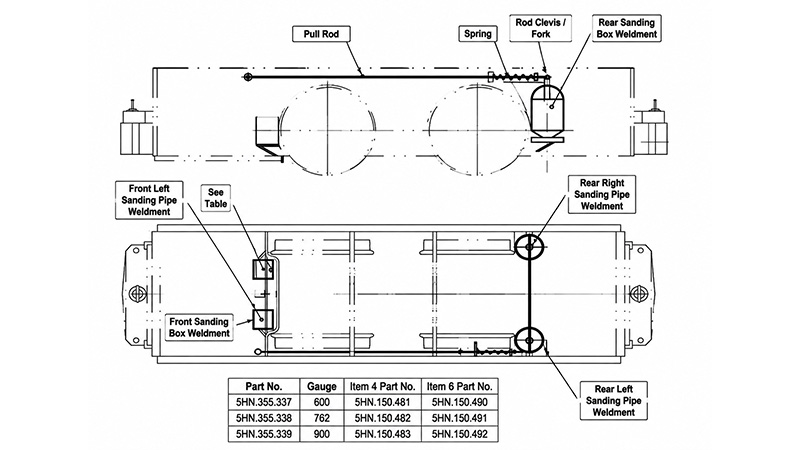
A sanding system can help improve adhesion by applying sand to the rail where needed. The CTY8, for instance, is described with pneumatic or mechanical rail sanding options. However, sanding is not a substitute for good track drainage, cleaning, and sensible operating speeds.
When comparing models, discuss available tractive effort, adhesive weight, rail condition, and how the sanding equipment is inspected and refilled. A locomotive that performs well on dry, level track may require a different operating plan in a wet mine.
3. Lighting and Audible Warning Devices
Poor illumination, dust, tunnel curves, and intersections can make approaching equipment difficult to detect. Effective lighting and warning devices help operators see the route and alert nearby workers before movement or when visibility is restricted.
Check the proposed headlight arrangement, visibility in both travel directions, audible warning device, and the availability of any additional warning equipment. Ensure these items meet the rules applicable to your mine and can be maintained without unnecessary downtime.
The U.S. Mine Safety and Health Administration (MSHA) identifies lights, audible warnings, radios, and other safety devices as important pre-operation checks for underground rail haulage. These checks matter regardless of which locomotive brand a mine purchases.
4. Operator Visibility and Cab Layout
A locomotive may spend part of its shift pushing cars, reversing, or passing through tight curves. In narrow tunnels, blind spots and limited clearance can increase the difficulty of spotting people, obstacles, and trackside equipment.
Cab layout should therefore be evaluated against the actual direction of travel and the mine's traffic arrangements. CSME's CTY8 offers a double-cab layout, while its CJY14 trolley locomotive is listed with a central cab. These are different arrangements, and neither should be treated as universally safer without examining the route.
Where the view ahead is obstructed by mine cars, operational controls, communication, and personnel separation remain essential.
5. Electrical Protection and Power-System Suitability
Battery and trolley locomotives require different electrical safety assessments. For battery models, buyers should check battery chemistry, enclosure design, charging procedures, ventilation requirements, and the protection devices supplied with the selected model. Lead-acid battery charging, for example, requires careful management of gas generation and electrolyte hazards.
Trolley locomotives draw power from an overhead contact system. Buyers should examine the installation and maintenance arrangements for contact wires, current collection, isolation, and electrical clearances.
Ask the supplier for model-specific electrical documentation and applicable approvals. If a locomotive will operate in a mine with potentially explosive atmospheres, verify that the exact equipment configuration meets the site's regulatory and certification requirements. Do not assume every electric locomotive is approved for every underground environment.
6. Couplings, Buffers, and Train Integrity
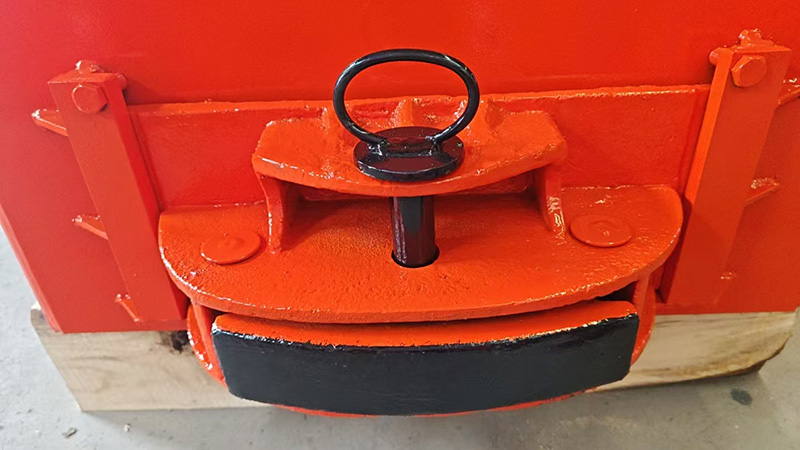
A locomotive's safety also depends on the cars it pulls or pushes. Incompatible or poorly maintained couplings can create problems during loading, starting, stopping, or movement on gradients. Train length and the location of personnel during coupling operations deserve attention as well.
Before ordering, confirm coupling dimensions, compatibility with existing mine wagons, and the need for safety chains or other retaining arrangements under local rules. Discuss the inspection of coupling components as part of routine maintenance.
Buffers may help absorb some impact energy during normal shunting, but they cannot make collisions harmless. They should be considered alongside controlled speeds, clear operating procedures, and reliable communications—not presented as complete collision protection.
7. Correct Sizing for Load, Track, and Gradient
Even well-equipped locomotives can be unsuitable if their basic dimensions and hauling capability do not match the mine. Important inputs include total hauled load, maximum gradient, rail gauge, minimum curve radius, tunnel clearance, expected trip frequency, and track condition.
For example, CSME lists the CTY8 with 600, 762, or 900 mm track-gauge options and a minimum turning radius of 7 m. The CJY14 lists the same gauge options but a minimum turning radius of 12 m. These published figures illustrate why choosing by locomotive tonnage alone is insufficient.
Ask for a haulage suitability review using your track layout and loaded-train requirements. The goal is a workable match between locomotive, wagons, route, and operating practices.
Battery or Trolley Locomotive: Which Fits Your Mine?
A battery-electric locomotive does not require an overhead power line along its travel route, which may suit layouts where installing trolley infrastructure is difficult. However, the mine must plan for charging, battery maintenance, and the required operating range.
A trolley locomotive can support extended operation where a suitable overhead supply network already exists, but it introduces contact-line infrastructure and associated electrical controls. The right choice depends on infrastructure, haulage demand, ventilation, maintenance resources, and site-specific restrictions—not on a blanket claim that one power source is safer.
Choose Safety Features Around Real Operating Conditions
Before requesting a quotation, prepare your track gauge, maximum gradient, minimum curve radius, tunnel dimensions, loaded train weight, and preferred power supply. Share any local certification requirements and ask which safety features are standard, optional, or dependent on the model.
At CSME, we supply battery-electric and trolley mining locomotives for different underground haulage needs. Contact our teamto discuss a configuration that fits your mine's operating conditions.
Sabrina He | Mining Machinery Specialist
With over 14 years of experience in the mining equipment industry, Sabrina He specializes in machinery selection, technical troubleshooting, and plant optimization.