Welcome to Changsha Mining Equipment Co., Ltd.
Why Choose Chopper Control for Mine Locomotives?
If you operate or maintain mining locomotives, you’ve likely encountered the term “chopper control.” But what exactly is it, and why should it matter to your operation?
This guide breaks down chopper control in straightforward language. Even without a technical background, you’ll see why this technology offers a smarter path for underground traction.
What Is Chopper Control?
Chopper control is an electronic method for regulating a mining locomotive’s motor speed. Imagine a light dimmer switch. Instead of a simple on/off choice, you get the full range between zero and maximum power.
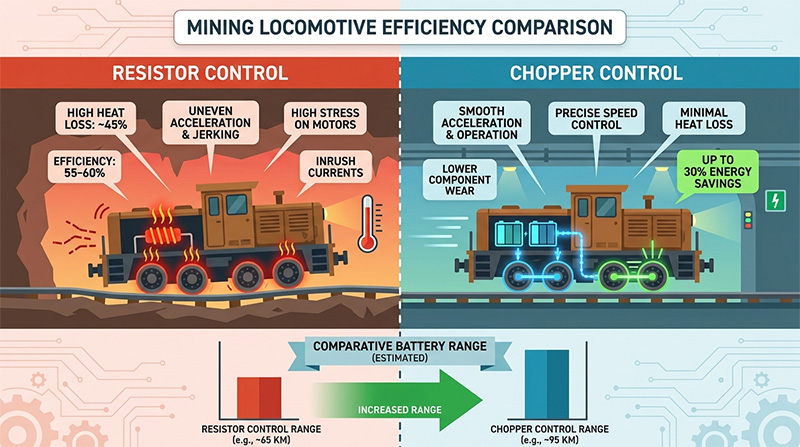
Traditional locomotives often rely on resistor control, which functions more like an old fan with only a few fixed speeds. The drawback? Excess energy is wasted as heat. Chopper control takes a different approach—it adjusts power seamlessly while conserving energy.
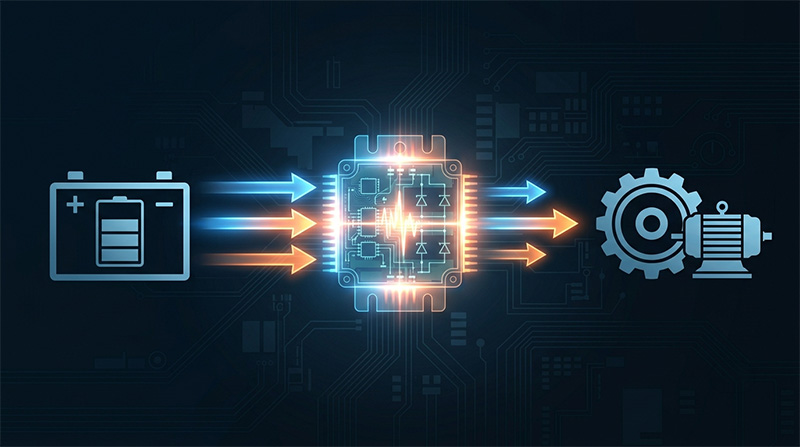
How It Works in Simple Terms
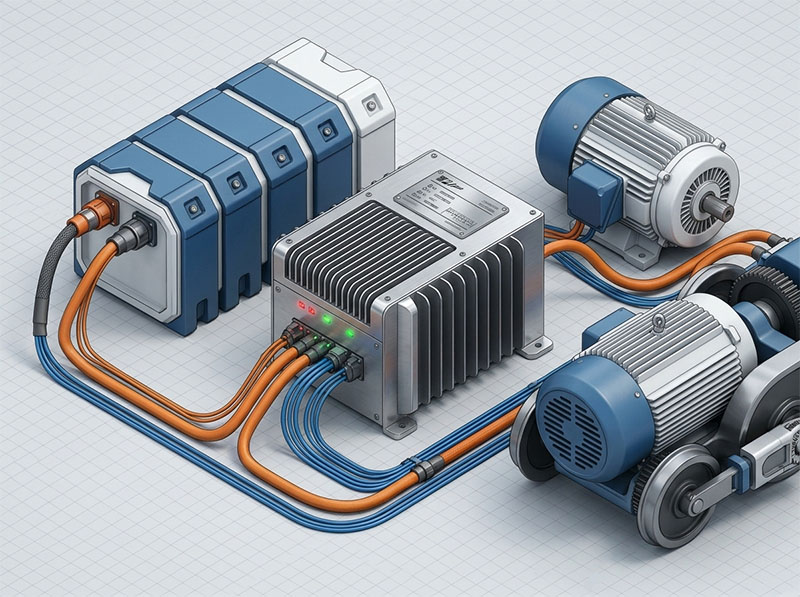
The chopper switches the power supply on and off extremely rapidly—thousands of times per second. By varying the “on” time, it precisely controls how much power reaches the motor. The result is smooth acceleration from a standstill all the way to full speed.
Inside the system, dedicated components safeguard the motor and maximize energy efficiency. The operator simply uses a handle. Pushing it forward increases speed gradually—no jerking, no sudden lurches.
Key Benefits for Your Mine
Energy Savings Over 30%
Resistor control dissipates significant power as heat. Chopper control avoids this waste. You get the same hauling work while drawing less from the battery. This translates into extended shift life and lower electricity costs.Smooth Starting and Reduced Mechanical Wear
Resistor-driven locomotives can jolt forward, stressing gears, wheels, rails, and couplings. Chopper control provides progressive starting. Equipment lasts longer, maintenance intervals stretch, and operators experience a smoother ride.Eliminates Switching Sparks
Older systems generate arcs when changing speed or direction, which erodes switch contacts. Chopper control operates without such arcing. Switchgear lasts significantly longer, cutting replacement and downtime.Integrated Protection Features
The system actively protects itself. If the motor draws excessive current—from overloading or a mechanical bind—the chopper scales back rather than risking burnout. Temperature monitoring is also built in. If the unit overheats, it pauses briefly until it cools, then resumes.
Is It Complicated to Operate?
Not at all. Operators adapt quickly. Typically, there are two controls:
A direction selector—forward, neutral, reverse
A speed controller
The speed handle functions like a throttle. Push forward to accelerate, pull back to decelerate. A dedicated “coast” position further conserves energy when cruising.
Maintenance Considerations
Chopper control demands less upkeep than resistor-based systems. There are simply fewer components subject to routine wear. Core maintenance includes:
Inspecting cables and rubber seals
Checking bolt torque
Lubricating moving linkages
Periodic insulation testing
Field repairs are generally straightforward. However, only a qualified technician should open the sealed unit, and the battery must always be disconnected first.
Safety Reminders
Always bring the locomotive to a complete stop before changing direction. Never force the control handles. Avoid powering against an engaged brake. Before leaving the cab, return both handles to zero and apply the mechanical parking brake.
Bottom Line
Chopper control is a proven technology, yet for many mining locomotives, it remains a significant upgrade. It delivers energy savings, extends equipment life, protects critical components, and improves the operator’s working environment.
If your fleet still uses resistor control, transitioning to chopper control offers a rapid return on investment—through lower battery costs, fewer repairs, and reduced downtime.
Whether you’re a mine owner, maintenance supervisor, or procurement professional, chopper control deserves a close look. It’s one of those straightforward improvements that drives tangible, day-to-day operational gains.
Sabrina He | Mining Machinery Specialist
With over 14 years of experience in the mining equipment industry, Sabrina He specializes in machinery selection, technical troubleshooting, and plant optimization