Welcome to Changsha Mining Equipment Co., Ltd.
Nature’s Unfathomable Power: Reflections on the China's Xizang-Nepal Border Tragedy
Our hearts are heavy this week as we process the tragic news of the catastrophic mudslide at the China's Xizang-Nepal border. Triggered by a massive avalanche at an altitude of over 7,000 meters, the disaster has swept through the region, claiming lives and destroying infrastructure.
Before we look at the geological implications of this event, our entire team wants to extend our deepest condolences to the border crossing staff, frontline workers, and local communities affected by this tragedy. These brave individuals work in some of the most unforgiving environments on Earth to keep international trade and borders functioning. Their loss is profoundly felt.
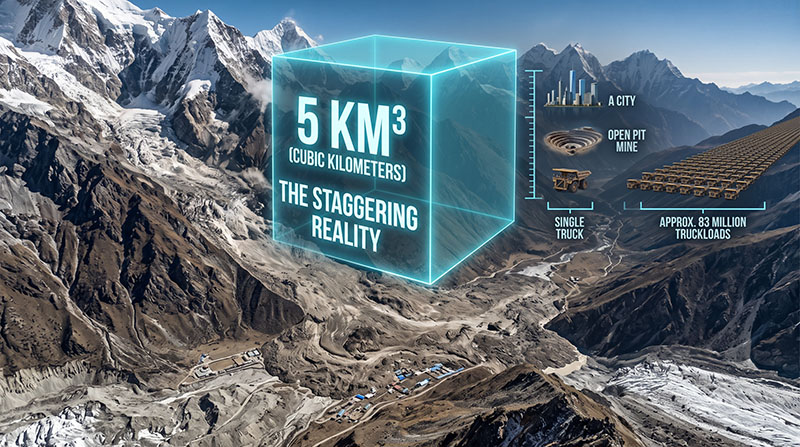
The Staggering Reality of "5 Cubic Kilometers"
As mining professionals, we deal with earth-moving calculations every day. We talk in terms of cubic meters of ore, bucket capacities, and daily tonnage. But the geological data emerging from this disaster includes a number that left us utterly speechless: an estimated 5 cubic kilometers of earth and debris were displaced.
To put that into a perspective that miners can understand: 5 cubic kilometers is 5 billion cubic meters. If you were to load that volume into standard heavy-duty mining haul trucks (assuming a generous 60 cubic meter capacity per truck), it would require over 83 million truckloads. It is a scale of geological destruction that defies human engineering and reminds us of our absolute vulnerability in the face of nature.
Global Warming and the High-Altitude Threat
What caused a mountain to collapse so violently? The root cause points to an avalanche at extreme altitudes, severely exacerbated by global warming.
Rising global temperatures are rapidly melting glaciers and thawing permafrost in the Himalayas. Permafrost acts as the "glue" that holds these towering, fractured rocky peaks together. When that ice melts, the structural integrity of the mountain vanishes, turning solid peaks into ticking time bombs of loose rock and water.
A Warning for the Global Mining Community
While this disaster occurred in the Himalayas, its lessons echo far beyond Asia. Many of our friends, partners, and clients operate in similarly extreme environments—particularly in the high-altitude regions of South America, such as the towering peaks of Bolivia and the Andes, as well as mountainous terrains in parts of Africa.
If you are operating a small-to-medium mine at altitudes of 4,000 or 5,000 meters, this tragedy poses a crucial question: Do we need to worry about similar landslides?
The short answer is yes.
High-altitude mining environments share many of the exact same risk factors:
Thawing Permafrost: Just like the Himalayas, the Andes are experiencing rapid glacial retreat and permafrost degradation. The ground you are tunneling into today may not be as stable as it was ten years ago.
Blasting Vibrations: In mining, we rely on explosives to break rock. In high-altitude, steep-gradient areas where the geological "glue" is already melting, the shockwaves from daily blasting can inadvertently act as the trigger for a larger structural collapse.
Extreme Weather: The increased frequency of intense, unpredictable rainfall in high-altitude deserts can quickly turn loose debris into a deadly mudslide.
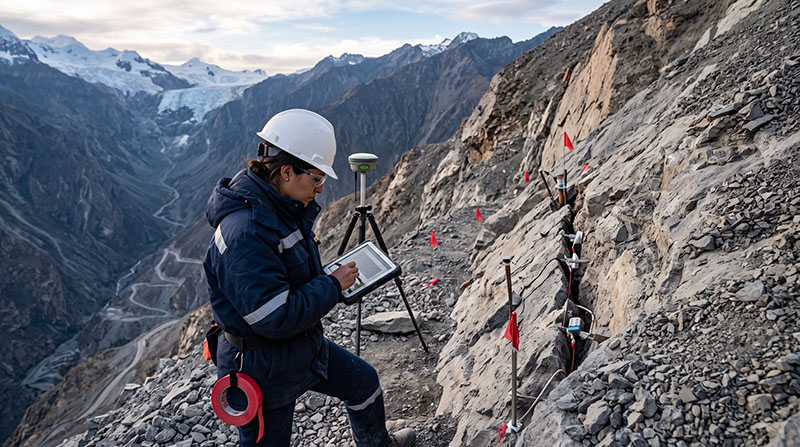
Respecting the Mountain
At the end of the day, mining is about extracting value from the earth, but it must be done with an unwavering respect for the mountain. The 5 cubic kilometers of earth moved in a matter of hours at the China's Xizang-Nepal border is a humbling reminder that nature always has the final say.
To our clients and fellow miners working in the thin air of the world's highest peaks: Please review your geotechnical surveys, monitor the slopes above your adits and shafts, and factor climate change into your daily safety protocols.
Stay safe, look out for one another, and always respect the profound power of the earth we work with.
Sabrina He | Mining Machinery Specialist
With over 14 years of experience in the mining equipment industry, Sabrina He specializes in machinery selection, technical troubleshooting, and plant optimization.