Welcome to Changsha Mining Equipment Co., Ltd.
How to Size a Mine Hoist Winch: Shaft Depth, Load, Drum Size & Motor Power
Choosing the right mine hoist winch is not simply about selecting the biggest motor or largest drum. A properly sized hoist must match the shaft depth, suspended load, wire rope, lifting speed and drum capacity.
If the hoist is too small, it may wear faster. If it is too large, the mine may spend more on equipment, foundations and electrical capacity than necessary.
1. Start With Shaft Depth
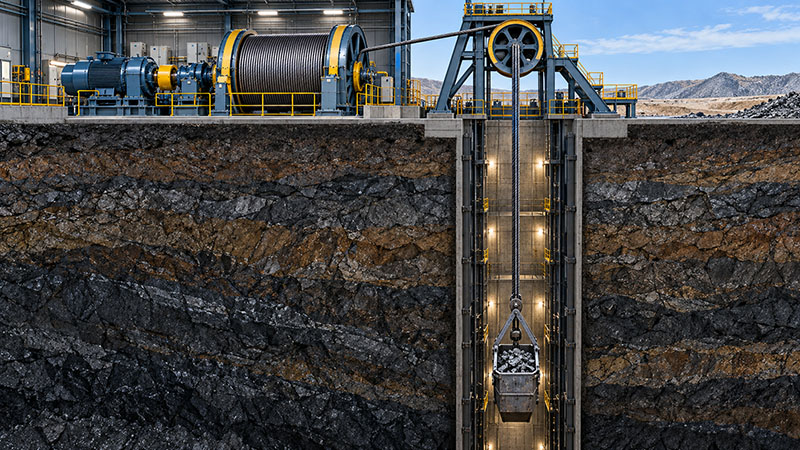
Shaft depth is one of the first specifications a hoist supplier will ask for.
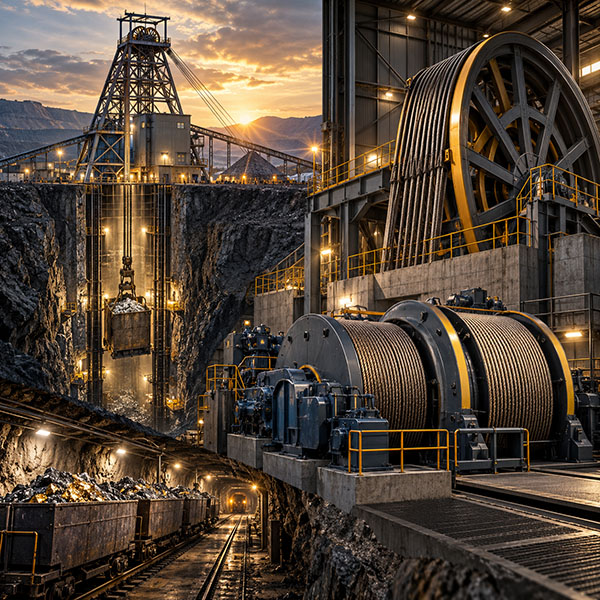
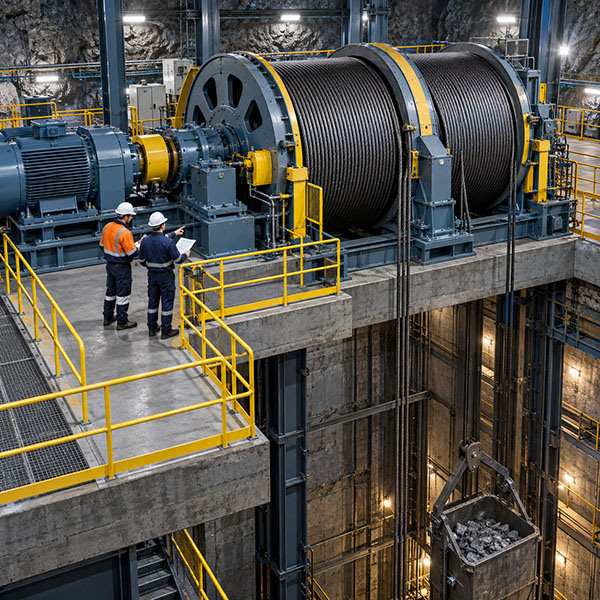
The deeper the shaft, the more wire rope the drum must store. Required rope length is normally greater than the vertical shaft depth because additional rope may be needed for the head sheave arrangement and operating allowance. If you want to understand how the hoist, headframe, sheaves, wire rope and conveyance work together, see our complete guide to mine hoisting systems.
As depth increases, a larger drum diameter, greater drum width or additional winding layers may be required.
Future development should also be considered. If a shaft will become deeper, selecting only for today’s depth may lead to another upgrade.
2. Calculate the Actual Hoisting Load
Payload alone does not tell you how much the hoist actually needs to lift.
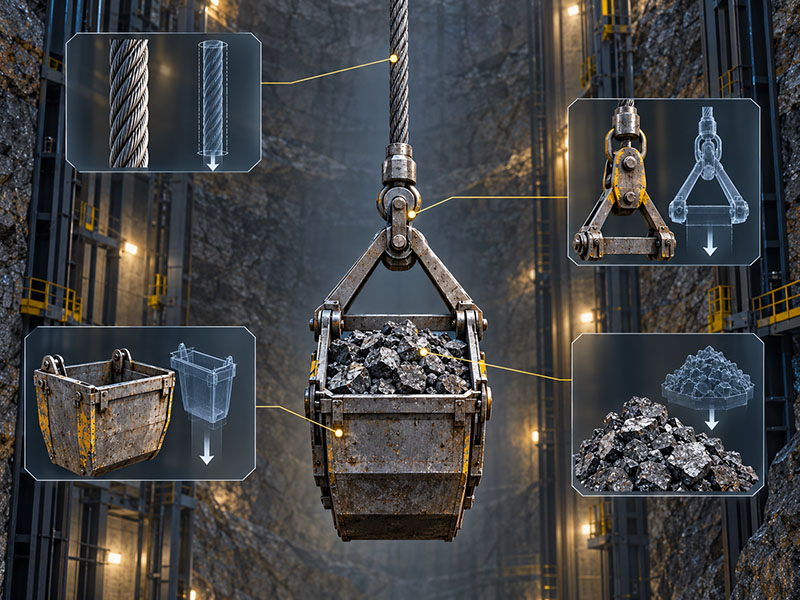
The total suspended load may include:
· Ore or material payload
· Skip or cage weight
· Wire rope weight
· Rope attachments
Wire rope weight becomes more important as shaft depth increases. A long steel rope can add a significant load to the system.
The required hoisting force should therefore be checked against the maximum static tension of the selected hoist. Final selection should be based on engineering calculations rather than payload alone.
3. Match Drum Size to Rope Capacity
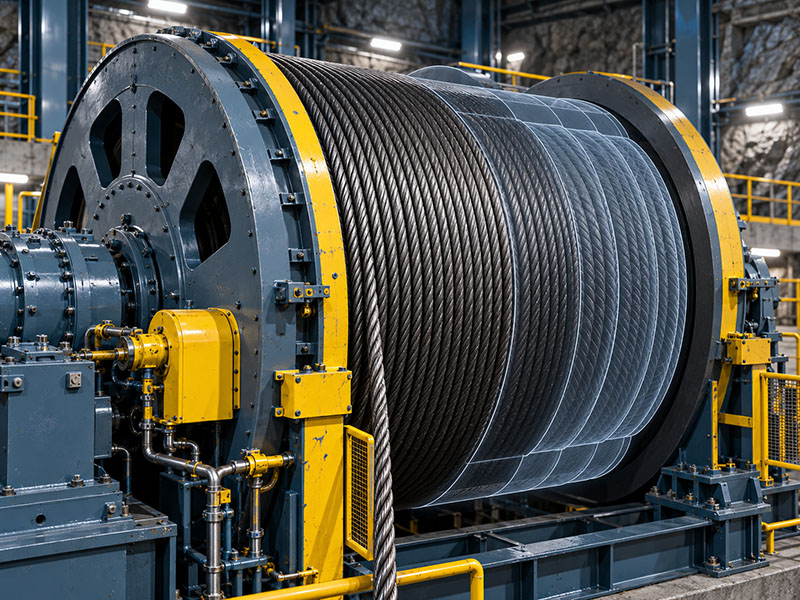
The drum both generates pulling action and stores the wire rope. Its diameter and width affect rope capacity and lifting depth.
A wider drum stores more rope in each winding layer, while multi-layer winding can increase capacity for deeper shafts.
A simple selection relationship is:
Shaft depth → Required rope length → Rope diameter → Drum size → Winding layers
These parameters should be considered together.
4. How Much Motor Power Does a Mine Hoist Need?
Motor power should normally be selected after the load, speed and operating conditions are known.
In simple terms:
Power ≈ Hoisting Force × Lifting Speed ÷ System Efficiency
In practice, the final calculation also considers acceleration, transmission efficiency, operating duty and a suitable margin.
Two hoists with similar load ratings may therefore use different motor powers. A larger motor does not automatically mean higher productivity; the rest of the hoisting system must match the same operating conditions.
A Simple Mine Hoist Sizing Example
Consider a simplified vertical-shaft project:
· Shaft depth: about 450 m
· Payload per trip: about 6,000 kg
· Skip weight: about 3,200 kg
· Target hoisting speed: around 4.5 m/s
At first glance, it may seem that the mine only needs a hoist for a 6-ton load. In reality, the hoist also supports the skip, wire rope and other suspended parts.
If the rope and attachments add another 2,500 to 3,000 kg, the total suspended load can approach 12 tons.
This changes the selection. The drum must store enough rope for the shaft depth plus an operating allowance. Rope diameter must suit the suspended load and will also influence drum diameter and width.
Motor power is then selected according to actual load, lifting speed, system efficiency and duty. For a project in this range, the preliminary motor requirement may be in the several-hundred-kilowatt range, but the final value should be confirmed by detailed calculation.
Production also matters. If one complete cycle takes about 6 to 7 minutes, the system may complete roughly 8 to 10 cycles per hour. With a 6-ton payload, theoretical handling capacity could be around 50 to 60 tons per hour before delays are considered.
This example shows why mine hoist selection should never be based on payload alone.
5. Avoid Oversizing and Undersizing
An undersized hoist may operate near its limit for long periods, increasing motor loading, braking demand and component wear.
Oversizing can increase foundation cost, electrical requirements and initial investment without providing a meaningful production benefit.
The better approach is to select a hoist that operates comfortably within its designed range while allowing reasonable room for future development.
What Information Should You Send to a Hoist Supplier?
Before requesting a quotation, prepare:
· Vertical or inclined shaft
· Current and final shaft depth
· Maximum payload per trip
· Skip or cage weight
· Required lifting speed
· Target production capacity
· Wire rope diameter, if known
· Available power supply
· Operating hours per day
· Single-drum or double-drum arrangement, if known
These parameters allow the supplier to make a more accurate preliminary selection of static tension, drum capacity, motor power and hoist configuration.
Conclusion
Sizing a mine hoist winch is a system-matching process. Shaft depth determines rope requirements, load determines hoisting force, rope selection affects drum size, and lifting speed influences motor power.
For small and medium underground mines, a correctly sized hoist can provide a better balance of investment cost, operating efficiency, maintenance requirements and future expansion capacity than simply choosing the largest machine available.
If you are planning a new shaft or replacing an existing hoist, send us your shaft depth, payload, skip or cage weight, required lifting speed and power supply. Our engineering team can recommend a suitable mine hoist or mining winch configuration for your operating conditions.
Sabrina He | Mining Machinery Specialist
With over 14 years of experience in the mining equipment industry, Sabrina He specializes in machinery selection, technical troubleshooting, and plant optimization.