Welcome to Changsha Mining Equipment Co., Ltd.
What is a Pneumatic Rock Loader? Working Principles Explained for Beginners
Imagine you are deep inside a narrow underground tunnel, surrounded by piles of broken rock and ore left behind after a blast. You need to clear this "muck" to advance the heading and lay more track. A human with a shovel is far too slow and expensive. A massive diesel scooptram is too wide to even fit in the drift.
So, what machine handles this demanding job? Enter the rock loader, also known as the mucking machine. If you are new to the mining industry or responsible for procurement and trying to understand the equipment landscape, this article will explain, in simple terms, what is a rock loader, how the clever rocker shovel mechanism operates, and why compressed air is the lifeblood of this essential piece of underground gear.
What Exactly is a Pneumatic Rocker Shovel? (Terminology Clarified)
Before diving into the mechanics, let's clarify the jargon. In the mining world, you will hear a variety of names thrown around: rock loader, air loader, pneumatic shovel, rocker shovel, or mucking loader. While there might be minor design variations between models, they all generally refer to the same type of machine: a rail-mounted device designed to scoop up blasted rock and throw it backward into a mine car.
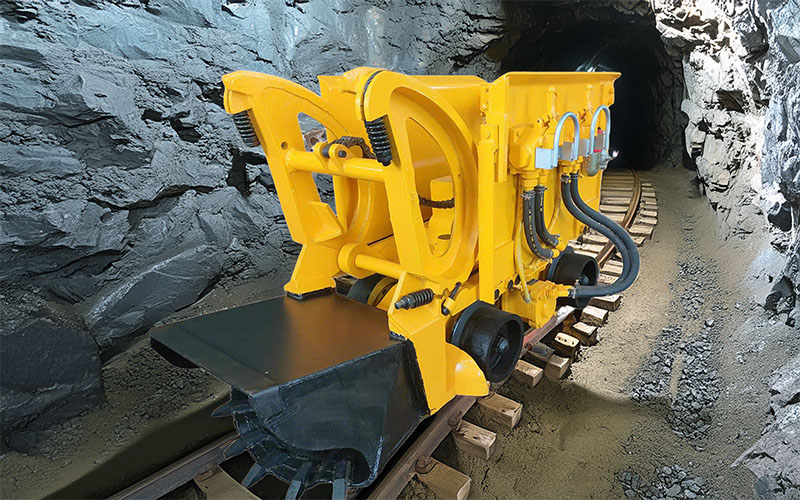
The key word here is Pneumatic. Unlike a diesel truck or an electric motor, a pneumatic shovel mining machine runs entirely on Compressed Air. Think of it like blowing up a balloon and then letting it go—the rush of escaping air creates thrust and power. In mining, this is critical. Underground environments, especially in coal or gaseous metal mines, are highly hazardous.
An electric spark can ignite methane gas, and diesel exhaust creates toxic fumes that require massive ventilation systems. Compressed air offers the perfect solution: it provides immense power with no sparks and zero exhaust emissions. It is simply the safest power source for air loader underground operations.
How Does a Rock Loader Work? (The "Overshot" Mechanism Explained)
Now, let's get to the heart of how rocker shovel works. It might look like a complex piece of heavy iron on tracks, but the working principle of a mucking machine is elegantly simple. It relies on two main air motors working in perfect sync and a clever bucket trajectory known as the "Overshot" or "Overhead Throw."
The Two Main Motors (Division of Labor)
Inside the body of the loader, there are two distinct pneumatic motors (or a single motor with a dual-function clutch system) that handle two separate jobs:
The Traction Motor (Walking): This motor powers the steel wheels. It propels the machine forward along the mine rails to "attack" the rock pile and reverses it to reposition. It operates much like an old steam locomotive, but powered by air instead of steam.
The Bucket Motor (Lifting): This motor engages a drum with a wire rope (cable) attached to the front bucket. It is responsible for hoisting the heavy load of rock vertically and guiding it along the curved rocker arms.
The "Scoop and Throw" Action (Step-by-Step)
The unique feature of the rocker shovel is its ability to load cars behind the machine without ever having to turn around. Here is the cycle broken down into four simple steps:
Step 1: The Charge (Scooping). The operator opens the throttle on the traction motor. The machine lurches forward with considerable momentum, driving the sharp lip of the steel bucket deep into the muck pile. This forward thrust ensures the bucket is filled completely with broken rock.
Step 2: The Lift (Engaging). With the bucket full, the operator disengages traction and engages the bucket motor. The wire rope tightens and begins to pull the bucket upward.
Step 3: The Overshot (The Magic Trick). This is the key concept. Imagine holding a handful of sand and throwing it straight backward over your own head. As the bucket motor continues to pull, the bucket follows the curved path of the rocker arms mounted on either side of the loader. It rises sharply, arcs over the top of the machine's body, and tips completely upside down. At the apex of this arc, the rocks slide out of the bucket and fall into a mine car coupled directly behind the loader. The operator doesn't need to turn the machine around or maneuver sideways; the overshot mechanism does the directional change for them.
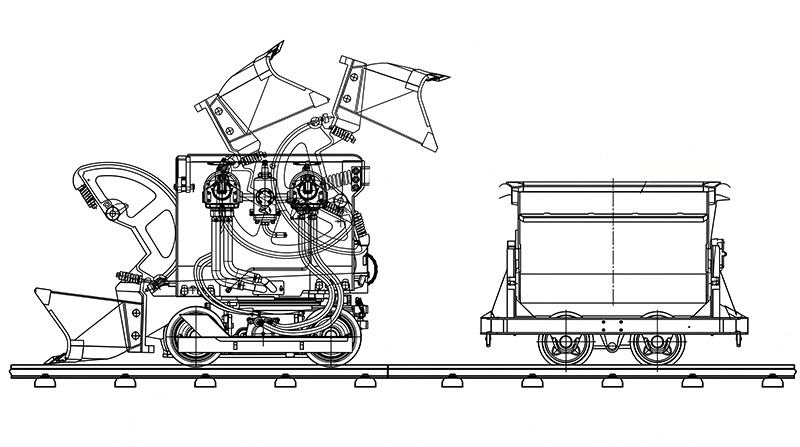
Step 4: Return and Repeat. Gravity pulls the empty bucket back down the rocker arm track to the ground. The machine reverses a few inches to get a fresh bite on the pile, and the whole cycle repeats. This process is remarkably efficient, with modern machines like the ZQ Series completing a full mucking machine working cycle in as little as 8 seconds.
Where Are Air Loaders Used the Most?
You might wonder why this seemingly old-school technology remains so vital in modern mining. The answer lies in niche applications where size and safety are non-negotiable.
Narrow Vein Mining: Some of the world's most valuable gold and silver deposits are found in veins only a meter or two wide. Modern LHDs (Load-Haul-Dump machines) physically cannot fit into these small tunnels. A rail-mounted air loader, with a width often less than 900mm, is the only mechanical mucking solution available.
Hazardous and Gassy Environments: As mentioned earlier, the absence of electrical sparks makes the pneumatic shovel mining approach the gold standard in coal mining and other "gassy" operations. It allows work to proceed safely without the risk of explosion.
Extreme Depth and Heat: In very deep, hot mines, diesel engines overheat and emit more fumes. An air loader actually acts as a cooling unit, as the expanding compressed air exhaust helps lower the ambient temperature of the drift.
Introducing the ZQ Series Pneumatic Rock Loader
Now that you understand the working principles behind a rocker shovel, you can appreciate what makes a quality machine stand out. A good air loader isn't just about moving rock; it's about reliability, parts availability, and cycle speed.
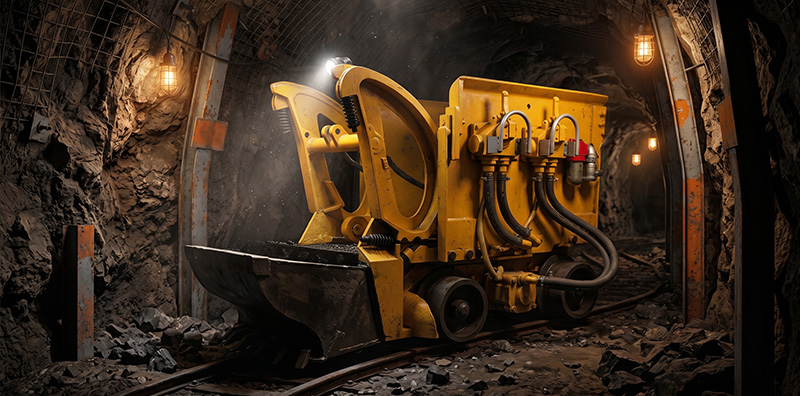
The ZQ Series (ZQ13 and ZQ17) embodies the best of this classic "overshot" design. These machines are engineered to be direct replacements for legacy equipment while offering improved manufacturing tolerances and modern material strength. With a powerful dual-motor setup and a lightning-fast 8-second loading cycle, the ZQ Series maximizes your productivity in the tightest headings. It's a robust, no-nonsense solution that any experienced miner can operate without a learning curve.
Conclusion
The pneumatic rock loader is one of mining's most ingenious mechanical inventions—a simple, air-powered device that turns a cumbersome mucking job into a smooth, rhythmic operation. By using compressed air for safety and an overhead throw for efficiency, it remains an irreplaceable tool for narrow vein and hazardous mining.
If you want to learn more about the specific capabilities of the ZQ13 or ZQ17, or if you'd like to see a video of this fascinating mucking machine working in action, contact our team today. We are happy to provide detailed specs, operational footage, and a competitive quote for your next project.
Sabrina He | Mining Machinery Specialist
With over 14 years of experience in the mining equipment industry, Sabrina He specializes in machinery selection, technical troubleshooting, and plant optimization.