Welcome to Changsha Mining Equipment Co., Ltd.
Surviving the Heat: What European Melting Train Tracks Teach Us About Mining Rail Selection
Recent headlines have exposed a startling vulnerability in Europe's railway infrastructure. In late June 2026, an unprecedented heatwave swept across the continent, causing severe disruptions to rail networks in multiple countries. In Leipzig, Germany, abnormally high temperatures physically damaged tram tracks, forcing local transit services to a standstill. Media reports confirmed that rail surface temperatures on sun-exposed sections reached a blistering 60°C, triggering urgent warnings from engineers about "track buckling" and derailment risks.
The crisis forced Eurostar to cancel multiple cross-channel trains on June 27, while Slovakia and other nations imposed emergency speed restrictions of just 80 km/h to prevent heat-induced rail deformation.
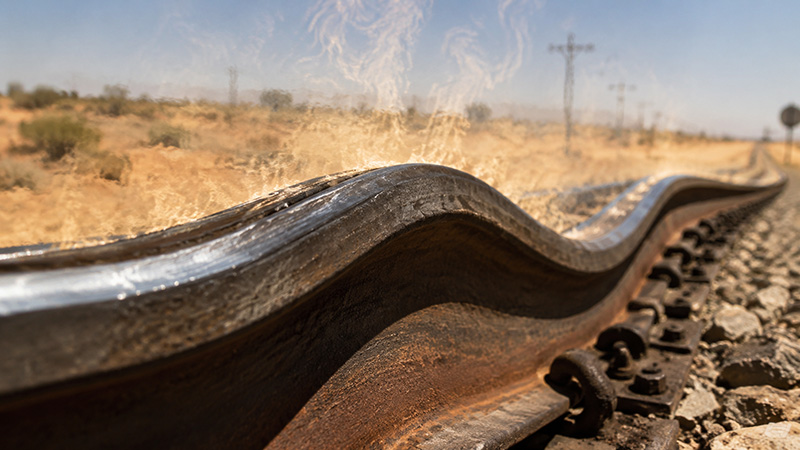
But here's the critical question for mining operations: if European railways—designed for relatively mild climates—are buckling under heat, what happens to your mine rails in the tropical heat of Africa or the high-altitude sun of South America?
The Mining Reality: Heat, Weight, and Continuous Stress
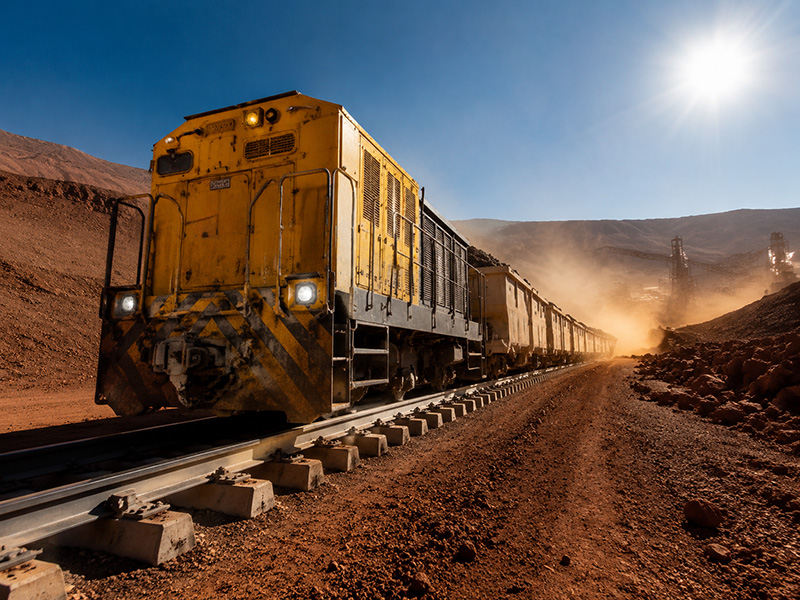
Mining operations in Africa and South America face conditions far more punishing than anything European passenger railways encounter. Your tracks don't just endure high temperatures; they withstand the relentless grinding of heavy ore loads, the vibration of constant locomotive passes, and often high humidity that accelerates corrosion. A rail that buckles or fractures under these conditions doesn't just cause delays—it halts production entirely. Every hour of downtime translates directly into lost revenue and missed delivery commitments. Choosing the right rail specification isn't just about compliance; it's about protecting your operational lifeline.
Light Steel Rails: The Backbone of Mining Locomotives
For most underground and surface mining applications, light steel rails provide the ideal balance of strength and practicality. These rails are specifically engineered to support the axle loads of mining locomotives ranging from 2.5 tons up to 14 tons, making them the industry standard for ore haulage.
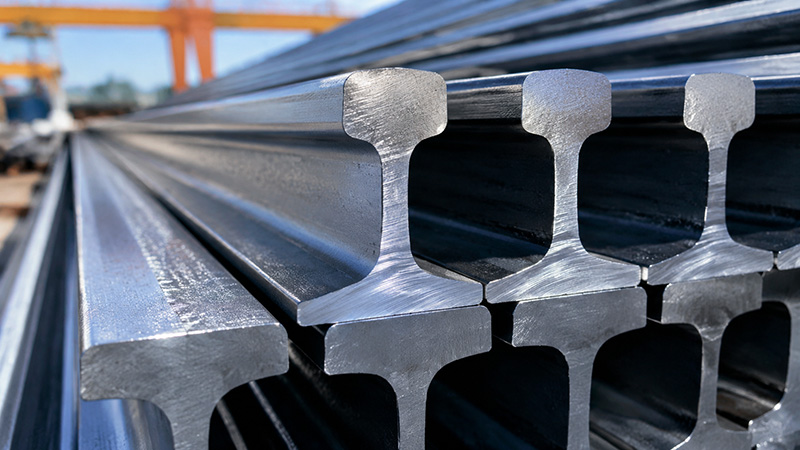
Our light rail range includes models from 8 kg/m up to 30 kg/m, manufactured to GB standards. The 8kg rail (head width 25mm, height 65mm) serves lighter cart applications, while the 12kg and 15kg rails (head widths of 38.1mm and 42.86mm respectively) are commonly specified for small to medium mining locomotives. For larger operations, our 18kg through 30kg rails provide progressively greater strength—the 30kg rail features a 60.33mm head width and 107.95mm height, delivering 30.1 kg/m of robust steel capable of handling heavier loads and higher traffic densities.
All light rails are available in Q235 and 55Q steel grades, with lengths customizable from 6 to 12 meters to suit your specific track layout. The 55Q grade offers enhanced wear resistance and thermal stability—critical advantages when operating in consistently hot environments where European-grade rails would be at risk.
For detailed specifications of our complete light rail offering, please refer to the attached parameter chart.
Heavy Rails and Crane Rails for Specialized Demands
For large-scale mining projects, main haulage routes, and port-based ore handling facilities, we supply a comprehensive range of heavy rails and crane rails. Our heavy rail line includes 38 kg/m through 60 kg/m profiles manufactured in U71Mn and 50Mn steel grades. These rails feature taller sections (up to 176mm for the 60kg/m rail) and wider bases (up to 150mm), providing the stability and load-bearing capacity required for high-tonnage operations.
Our crane rail range covers QU70 through QU120 specifications, with head widths from 70mm to 120mm and weights up to 118.1 kg/m. These rails are engineered for extreme point loads and repetitive stress, making them ideal for gantry cranes, shipyard operations, and heavy industrial transfer points where precision and durability are non-negotiable.
For heavy-duty applications and specialized crane installations, check our extended catalog with complete specifications.
Don't Let Heat and Inferior Rails Become Your Bottleneck
The lesson from Europe's heatwave is clear: rails designed for one climate cannot be expected to perform in another. Your mining operation deserves steel that's matched to your environment—materials that maintain their integrity when temperatures rise, and profiles that match the specific demands of your locomotives and load cycles.
Contact us today for a free consultation and quote tailored to your mining operation's specific needs. Whether you're running 2.5-ton utility locomotives or 14-ton main haulage units, we'll help you select the right rail specifications to keep your production moving—through heat, heavy loads, and everything in between.
Sabrina He | Mining Machinery Specialist
With over 14 years of experience in the mining equipment industry, Sabrina He specializes in machinery selection, technical troubleshooting, and plant optimization.