Welcome to Changsha Mining Equipment Co., Ltd.
Rocker Shovel Loader vs. Mucking Loader: Which Is Better for Underground Mining?
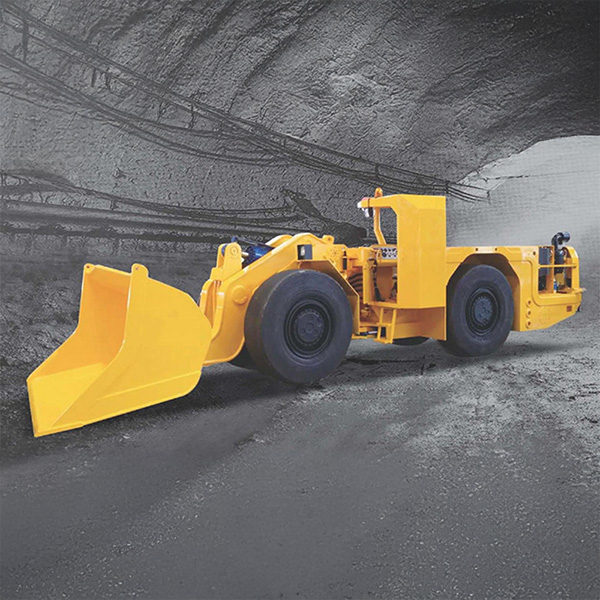
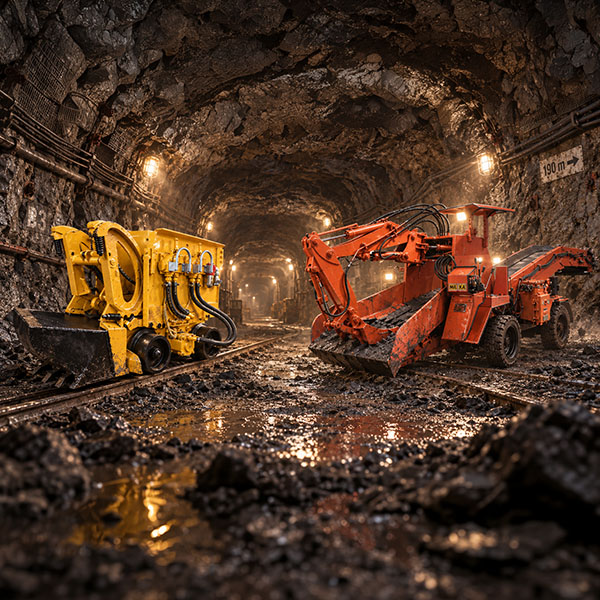
Removing blasted rock efficiently is a critical part of underground mining and tunneling. For narrow drifts and small tunnel sections, two common equipment options are the rocker shovel loader and the mucking loader.
Although both machines perform the same basic task—collecting muck from the working face and transferring it to haulage equipment—their working principles, power systems, mobility, and site requirements are very different.
Understanding these differences is important when choosing the right underground loader.
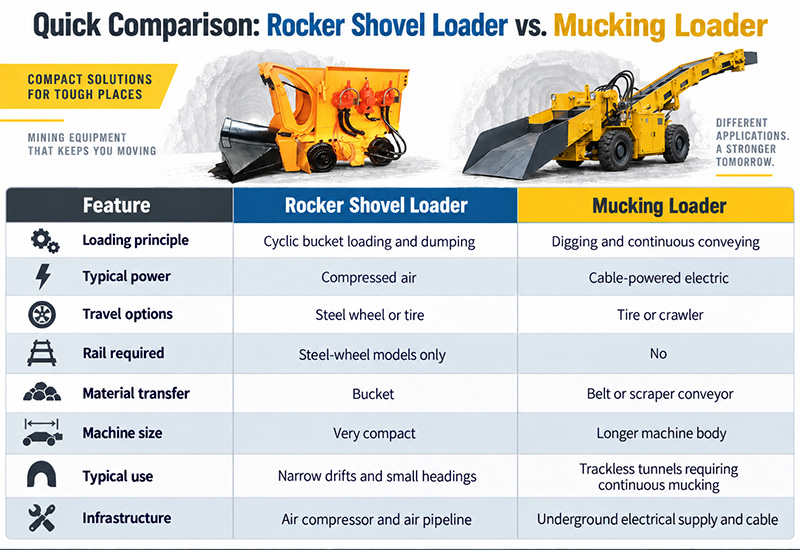
Different Working Principles
The most important mechanical difference is how the two machines move blasted rock.
A rocker shovel loader uses a bucket in a repeated loading cycle. The machine advances toward the muck pile, the bucket scoops the broken rock, and the rocker mechanism lifts and dumps the material into a mine car or other receiving equipment. The bucket then returns to the loading position and repeats the cycle.
This can be described simply as:
scoop → lift → dump → return
The design is mechanically compact and particularly suitable where underground space is limited.
A mucking loader, by comparison, combines a front digging mechanism with an integrated conveyor. The digging attachment gathers muck onto the machine, after which a belt conveyor or scraper conveyor continuously carries the material toward the rear discharge point.
Its workflow is closer to:
dig → gather → convey → discharge
The wheeled ZWY belt-conveyor models, for example, are designed around continuous material handling, while scraper-conveyor versions use a heavier-duty conveying system for coarse and abrasive muck.
Therefore, the rocker shovel loader is fundamentally a cyclic loader, while the mucking loader is designed around continuous material transfer.
Pneumatic Power vs. Cable-Powered Electric Operation
Power supply is another major difference and often determines which machine is practical for a particular mine.
Our rocker shovel loaders are pneumatically powered. Steel-wheel models typically operate at approximately 0.5–0.668 MPa working air pressure with 8–12 m³/min maximum air consumption.
Tire-type models use the same basic pneumatic concept. For example, the ZQ-13T requires 5×10⁵–6.68×10⁵ Pa working pressure and 8–12 m³/min maximum air consumption.
These machines are therefore especially suitable for underground operations where a reliable compressed-air network is already available.
Mucking loaders use electric motors and are supplied through an electrical cable. Their suitability depends instead on underground electrical infrastructure, including the available voltage, cable arrangement, and distance from the power source.
This makes power infrastructure one of the first questions to consider:
Does the mine have a suitable compressed-air system, or is cable-based electrical power more practical at the working face?
Steel-Wheel and Tire Rocker Shovel Loaders
Not all rocker shovel loaders require rails.
The traditional steel-wheel rocker shovel loader runs on mine rails. The ZQ steel-wheel series uses a standard 600 mm gauge, with 750, 762 and 900 mm options available.
This configuration is especially suitable for mines where rail haulage is already part of the transportation system.
However, pneumatic rocker shovel loaders are also available with tires.
The tire range includes both non-steering ZQ-T models and steering ZTQ models. The steering versions provide greater flexibility in tunnels with bends or irregular layouts.
Therefore, it is not accurate to say that rocker shovel loaders are only suitable for rail mines.
A better distinction is:
steel-wheel rocker shovel loader = pneumatic + rail-mounted
tire rocker shovel loader = pneumatic + trackless
mucking loader = cable-powered electric + wheeled or crawler
Machine Size and Tunnel Space
One major advantage of the rocker shovel loader is its extremely compact structure.
For example, the ZQ-13 steel-wheel model has a working length of approximately 2,140 mm, while the ZQ-13T tire model is approximately 2,240 mm long.
By comparison, even the smaller ZWY wheeled mucking loaders are approximately 5.2–5.7 meters long, while larger machines can reach 7.8 meters or more.
This difference can be decisive in short headings and very confined underground workings.
A mucking loader may still be narrow enough for a small roadway, but its integrated digging arm and conveyor require much more longitudinal space.
Wheeled or Crawler Mucking Loader?
For customers who choose a mucking loader, ground conditions become an important secondary consideration.
A wheeled mucking loader is generally suitable for relatively firm and reasonably level roadways. It offers convenient movement and repositioning without rails.
A crawler mucking loader provides better traction and stability on uneven or inclined ground. The crawler models in the catalog are designed for rougher underground conditions and are rated for climbing grades of up to approximately 25° on hard ground.
Crawler machines are therefore usually considered when floor conditions are more demanding.
Which One Should You Choose?
There is no universal answer because the two machines are designed around different underground operating systems.
A rocker shovel loader is a strong option when the mine has compressed air, the working section is extremely restricted, and a compact cyclic loading machine is preferred. Steel-wheel versions integrate naturally with rail haulage, while tire versions provide greater freedom in trackless workings.
A mucking loader is more suitable when cable-based electrical power is available and the operation benefits from continuous conveying. Wheeled versions suit relatively good roadway conditions, while crawler versions provide additional traction on rough or inclined floors.
Rather than comparing only loading capacity, buyers should first consider power supply, tunnel dimensions, roadway conditions, haulage system, and required mobility.
Once these site conditions are clear, choosing between a rocker shovel loader and a mucking loader becomes much easier.
Sabrina He | Mining Machinery Specialist
With over 14 years of experience in the mining equipment industry, Sabrina He specializes in machinery selection, technical troubleshooting, and plant optimization.