Welcome to Changsha Mining Equipment Co., Ltd.
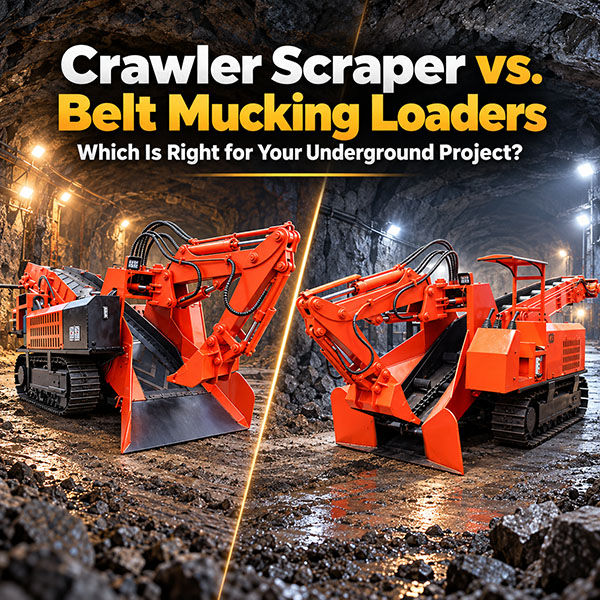
Crawler Scraper vs. Belt Mucking Loaders: Which Is Right for Your Underground Project?
Efficient material handling is essential for keeping underground mining and tunnel construction projects on schedule. Choosing the right underground mining muck loader can help streamline excavation, reduce unnecessary handling steps, and maintain a steady loading process.
Crawler scraper mucking loaders and crawler belt mucking loaders are two common solutions for underground muck removal. Although both machines combine digging, conveying, and loading functions, their conveying systems work differently and have distinct maintenance requirements.
Understanding these differences can help contractors and mine operators select a suitable tunnel mucking machine based on material conditions, tunnel dimensions, and project requirements.
Understanding the Difference Between Scraper and Belt Mucking Loaders
Both types of crawler mucking loaders use hydraulic digging arms to collect excavated rock and crawler tracks to move across underground working surfaces. The collected material is transported through an integrated conveyor and discharged into mine trucks or other haulage equipment.
The main difference lies in how the material is conveyed.
A scraper mucking loader uses a chain-driven conveyor with scraper flights that push excavated material along a steel trough. This mechanical design is worth considering when handling abrasive or irregularly shaped rock.
A belt mucking loader uses a continuously moving conveyor belt to transport material toward the discharge point. It can provide smooth material flow when the rock size, moisture content, and abrasiveness are compatible with the belt.
Neither system is suitable for every situation. The best choice depends on the conditions of the underground project.
Crawler Scraper Mucking Loaders: Built for Demanding Material Handling
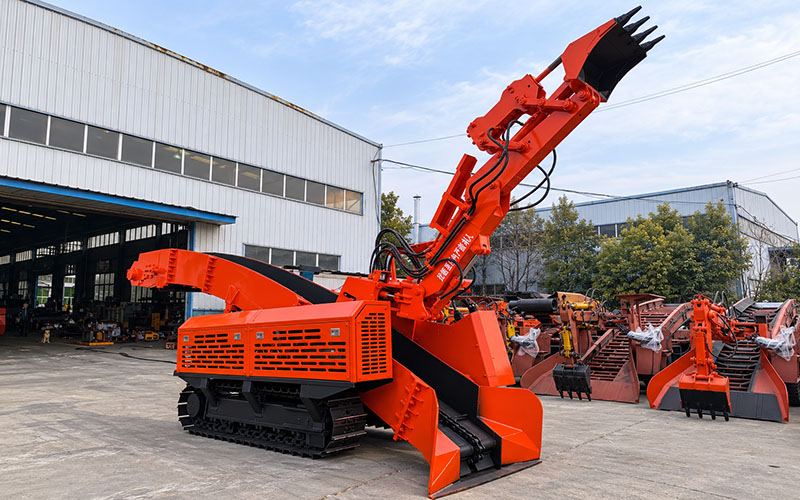
The ZWY-LG Series Crawler Scraper Mucking Loader from CSME combines hydraulic excavation with a heavy-duty scraper conveying system.
Its chain-and-scraper mechanism transports excavated material through a steel conveying structure, making it an option worth evaluating for underground projects involving coarse, irregular, or abrasive muck.
The series offers different machine sizes and loading capacities, with a maximum published rated loading capacity of 150 m³/h.
Scraper conveyors rely on mechanical components that require regular inspection. Chain tension, scraper wear, lubrication, and material buildup should be checked to maintain dependable operation.
For projects involving demanding rock conditions, the scraper conveyor's construction and wear characteristics may be important considerations when selecting equipment.
Crawler Belt Mucking Loaders: Continuous and Smooth Material Conveying
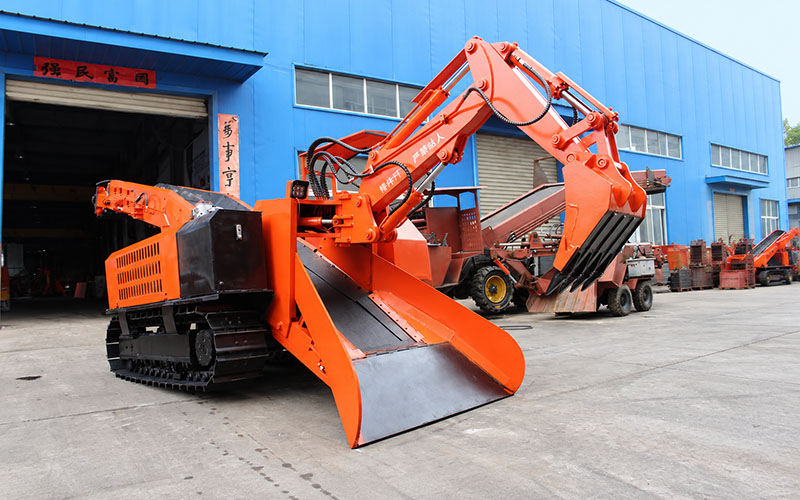
The ZWYL Series Crawler Belt Mucking Loader uses a belt conveyor to transfer excavated material from the digging area to the discharge end.
The belt system provides continuous material transportation and can be suitable for projects where excavated muck has characteristics compatible with belt conveying.
With different configurations available, the series offers a maximum published rated loading capacity of 160 m³/h, allowing buyers to select equipment according to their loading requirements.
Belt conveyors require attention to belt alignment, tension, roller condition, and surface wear. Sharp material, excessive loading, or improper tracking can increase maintenance needs.
When correctly matched to the material and operating environment, a crawler belt mucking loader can support steady underground loading operations.
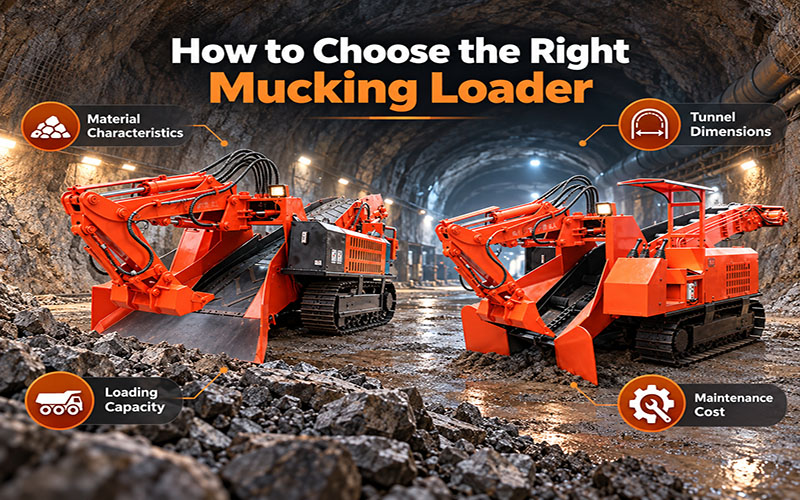
How to Choose the Right Mucking Loader for Your Project
When comparing crawler scraper and belt mucking loaders, several practical factors should guide your decision.
1. Material Characteristics
Rock size, hardness, abrasiveness, and moisture content directly influence conveyor performance.
Scraper conveyors may be worth considering for abrasive and irregular material, while belt conveyors can be practical for muck that is compatible with the belt structure.
However, conveyor type alone does not determine the maximum rock size a machine can handle. Always check the selected model's material passing limits.
2. Tunnel Dimensions and Working Conditions
Underground tunnels often have limited space for equipment movement and operation.
Both CSME series offer compact models with minimum applicable tunnel cross-sections starting from 2.2 × 2.2 meters.
Beyond tunnel dimensions, consider the roadway gradient, turning space, ground conditions, and required unloading height. Proper equipment sizing helps avoid operational restrictions.
3. Loading Capacity and Transport Compatibility
Higher nominal loading capacity does not always mean higher productivity.
The loader must work efficiently with the available transport vehicles. If trucks cannot receive or remove material quickly enough, even a high-capacity machine may experience unnecessary waiting time.
Choosing suitable equipment requires balancing excavation volume, conveyor performance, and haulage capacity.
4. Maintenance and Long-Term Operating Costs
Maintenance requirements differ between scraper and belt conveyors.
Scraper systems require attention to chains and scraper components, while belt systems need belt tracking, roller inspection, and tension adjustment.
Rather than focusing only on the purchase price, consider spare-part availability, operating conditions, service requirements, and potential downtime.
Frequently Asked Questions About Crawler Mucking Loaders
1. Which has lower maintenance costs: a scraper or belt mucking loader?
Neither type always has lower maintenance costs. Belt conveyors may be economical when handling suitable, relatively uniform material, but belt damage and roller replacement can increase expenses. Scraper conveyors have different wear components, including chains and scraper flights. Actual maintenance costs depend on material characteristics, operating hours, and maintenance practices.
2. Which mucking loader is better for narrow underground tunnels?
Both crawler scraper and crawler belt mucking loaders can operate in narrow underground environments when appropriately sized. The selection should consider the minimum tunnel cross-section, overall machine dimensions, turning requirements, and available working clearance. A compact machine is not necessarily suitable for every narrow roadway.
3. Can crawler mucking loaders handle large rocks and wet materials?
Crawler mucking loaders can handle different types of excavated material within their specified operating limits. However, large fragments may cause conveyor blockages, while wet or sticky muck can affect material flow. Buyers should confirm allowable rock size and moisture conditions before selecting a machine.
4. What should I consider when buying a crawler mucking loader?
Before purchasing, identify your tunnel dimensions, material characteristics, maximum rock size, expected loading capacity, and transport equipment requirements. A reliable crawler mucking loader manufacturer should use these details to recommend a suitable machine configuration rather than relying only on loading capacity.
Conclusion: Choose Equipment That Matches Your Working Conditions
Crawler scraper and crawler belt mucking loaders both provide practical solutions for underground excavation and material handling.
Scraper conveyors are worth evaluating for demanding abrasive-material applications, while belt conveyors can provide effective continuous transportation when material conditions are suitable.
The right choice depends on more than conveyor design. Tunnel dimensions, material properties, loading requirements, and maintenance considerations should all influence the decision.
At Changsha Mining Equipment Co., Ltd. (CSME), we provide underground mucking equipment for different mining and tunneling applications. Contact CSMEwith your project requirements to explore suitable crawler mucking loader solutions and request a quotation.
Sabrina He | Mining Machinery Specialist
With over 14 years of experience in the mining equipment industry, Sabrina He specializes in machinery selection, technical troubleshooting, and plant optimization.