Welcome to Changsha Mining Equipment Co., Ltd.
How to Troubleshoot Speed Regulation Failure on a 5-Ton Explosion-Proof Locomotive
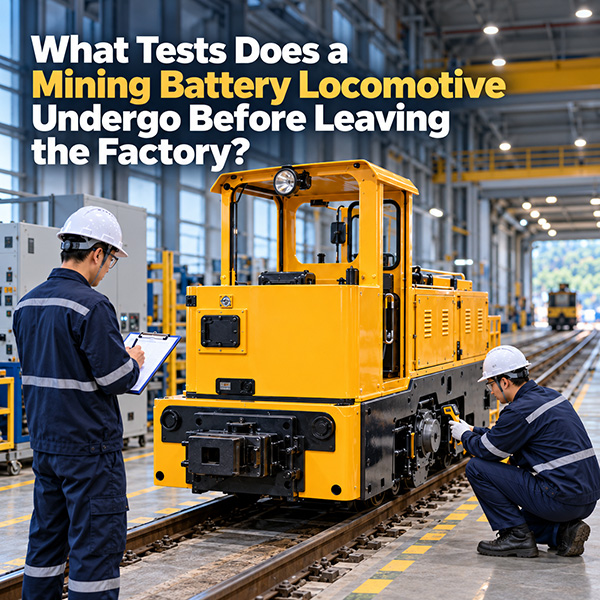
In the daily hustle of underground haulage, there’s a particular kind of silence that maintenance crews dread. You twist the controller handle, expecting that familiar surge of torque from a 5-ton explosion-proof battery locomotive, but nothing happens. The machine sits idle, the haulage schedule slips, and the pressure mounts.
While the CTY5/6, 7, 9GB is built like a tank for harsh mining environments—designed to shrug off dust, moisture, and heavy loads—even the most robust machines have their quirks. One issue that occasionally crops up on the workshop floor is a complete lack of speed regulation. The loco has power, but it won’t budge, or it’s stuck at a single speed.
Before you assume the worst and start pulling major components, it’s worth taking a breath. More often than not, the culprit is something a trained technician can sort out fairly quickly. Having spent years helping our clients keep these workhorses running, I’ve put together this straightforward guide. Think of it less as a manual and more as a chat with a senior engineer over a cup of coffee—focused on getting you back up and running with minimum downtime.
The Four Usual Suspects (And How to Clear Them)
When the speed controller gives you nothing, your troubleshooting starts at the heart of the traction system and works outward. Let’s walk through these one at a time.
1. The IGBT or Pulse Module Has a Failure Condition
The IGBT (Insulated Gate Bipolar Transistor) is effectively the pacemaker for your drive motor. It’s responsible for chopping the DC supply into the precise pulses that give you infinitely variable speed control. When an IGBT fails in an open circuit state, or the control pulse module that drives it goes haywire, the motor gets zero coherent instruction. You’ll typically notice a completely dead response from the throttle, as if the loco has no idea you’re asking it to move.
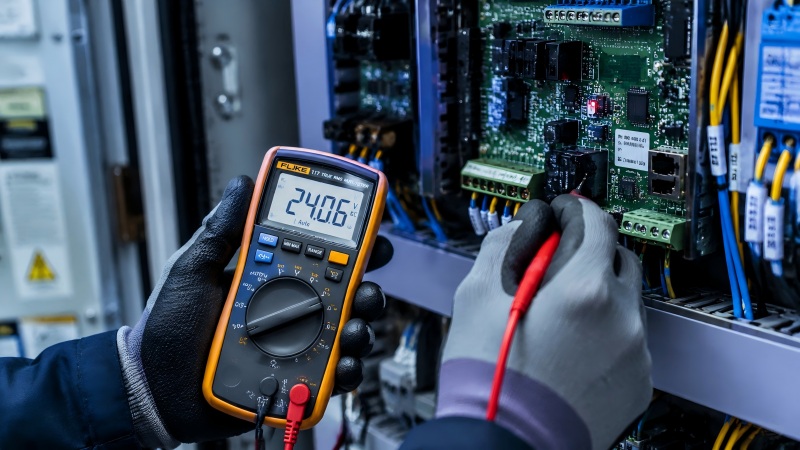
This isn’t a job for guesswork. A qualified electrician needs to put a meter on the module and check the gate drive signals. The inspection procedure is pretty standard, but it requires isolating the circuit properly. If the IGBT module shows signs of thermal stress or a short, don’t patch it—swap it out. Using a genuine replacement module is critical here; cheap aftermarket parts have a nasty habit of drifting out of spec when they get warm, which will have you chasing your tail later.
2. The Master Power Contact Isn’t Engaging (The Safety Interlock Trick)
This one catches a lot of good technicians off guard, so it’s always my first question when someone calls in a panic. Your loco might have battery voltage, but the main power circuit to the speed controller hasn’t actually closed. On these explosion-proof units, there’s a hard-wired safety interlock designed to prevent the loco from starting under load or in the wrong state.
The fix is often laughably simple. Walk to the other end of the locomotive—yes, the cab you aren’t currently using. Look at the reverser handle in that opposite cab. If it’s been left in the “Forward” or “Reverse” position, the interlock circuit remains open as a safety measure. Shift that idle handle firmly back into the Neutral detent. You’ll likely hear a quiet clunk as the main contactor re-engages. I’ve seen locomotives written up for major electrical surgery when the only problem was a second handle left in gear. The machine is just trying to protect you from a runaway start.
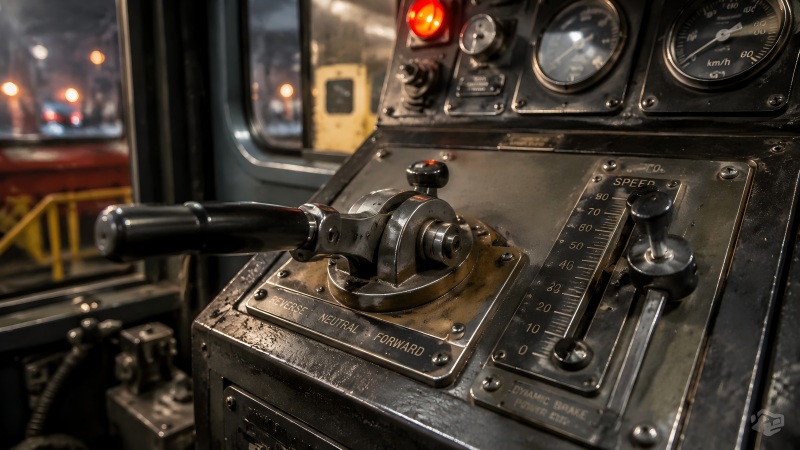
3. A Bad Connection on the Reverser Drum Contacts
Underground environments aren’t exactly clean rooms. Coal dust, limestone grit, and persistent vibration find their way into everything over time. The reversing shaft (the drum switch behind your main control handle) relies on solid copper-on-copper contact to bridge the field windings. When dust works its way in, or vibration loosens the terminal lugs, you get a high-resistance connection. The symptom is usually an intermittent “no-go” situation, or a throttle that cuts out when the loco hits a rough patch of track.
Pop the cover off the controller housing (in the clean environment of the workshop, mind you) and inspect the contact surfaces. If they’re just dirty or carboned up, a proper cleaning with electrical contact cleaner and a re-torque of the fasteners usually does the trick. But if you see deep pitting or the copper segments are badly worn down, you’re better off replacing the contact assembly. Tightening a worn-out part just buys you a few weeks; it’ll let you down during a heavy shift.
4. The Reference Voltage Signal is Missing
This is a slightly more subtle fault. Your control system needs a “given voltage” as a reference—a small signal that tells the IGBT driver exactly how much power you’re asking for. If this signal wire has been pinched, a potentiometer in the throttle handle has failed, or the setpoint device has a loose connection, the logic board sees a zero reference. It obediently sends zero power to the wheels.
Check the wiring loom running from your throttle handle down to the control box. Look for any signs of chafing, particularly where it passes through bulkheads. A simple continuity test on the giver pot while slowly sweeping the handle from zero to full range is often all you need. A dead spot on the pot is a common root cause.
A Hard Rule We Never Bend
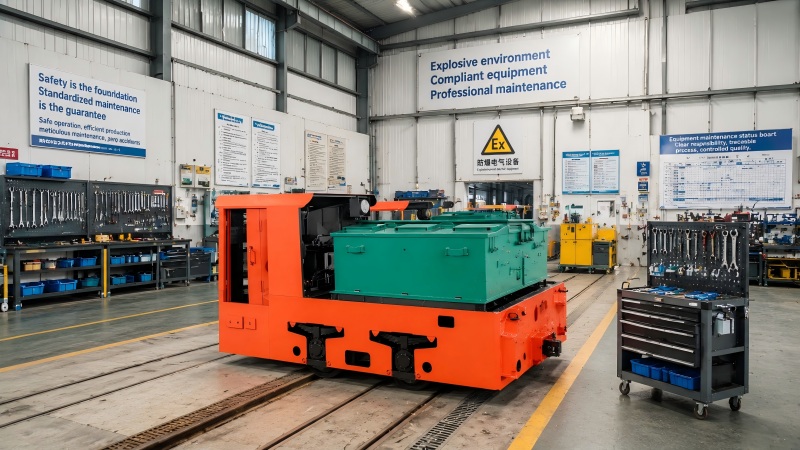
I’ll keep this short, because it’s non-negotiable. Every procedure I’ve just mentioned involves opening electrical enclosures. That work belongs strictly in the underground garage or a designated maintenance chamber.
You must isolate the battery breaker before a single panel comes off. If, for some exceptional reason, you have to do a live test or emergency check outside the garage, the safety chief needs to sign off on a gas check. You’re looking for a zero presence of methane (CH4) and coal dust. These machines are explosion-proof for a reason, and that certification is only as strong as the discipline of the crew maintaining them.
Keeping These Iron Horses Hauling
Our CTY series locos are built to the MT491-1995 standard for a reason—they’re meant to slog through conditions that would wreck lesser machines in a month. But solid engineering from the factory side works best when it’s paired with solid housekeeping on the operator side. A consistent routine of inspecting the control contacts and keeping the electronics bay free of dust will do more for longevity than any retrofitted upgrade.
If you’ve worked through these four points and the loco still isn’t pulling, or you suspect a deeper issue with the chopper control card, don’t hesitate to reach out. Our technical support team deals with these fault trees day in and day out. Send us a photo of the controller with its cover off, tell us the specific symptoms you’re seeing, and we’ll help you trace the root cause.
Sabrina He | Mining Machinery Specialist
With over 14 years of experience in the mining equipment industry, Sabrina He specializes in machinery selection, technical troubleshooting, and plant optimization.