Welcome to Changsha Mining Equipment Co., Ltd.
A Quick Guide to Troubleshooting Common Tricycle Clutch Problems
Is your tricycle experiencing a loss of power, strange noises, or shaky starts? The clutch is often the heart of the issue. A well-functioning clutch is essential for smooth gear shifts, power transfer, and overall performance. This guide will walk you through some of the most common clutch problems, their likely causes, and how you can fix them.
1. Clutch Slipping
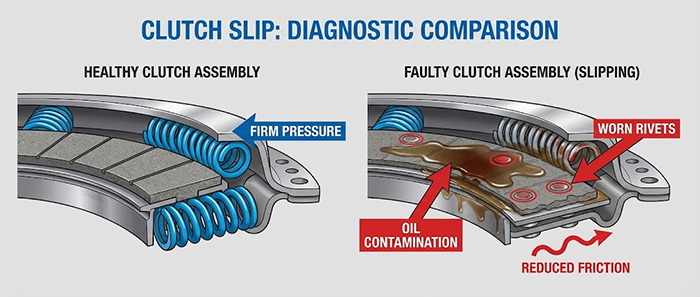
Do you feel the engine revving higher but the tricycle isn't accelerating as it should? This is a classic sign of a slipping clutch.
Causes:
Oil or grease on the friction plate or pressure plate.
Worn-out friction plates where the rivets are exposed.
Clutch clearance that is too small or uneven.
Weak or fatigued clutch springs.
Solutions:
Clean the oil-contaminated parts thoroughly with gasoline.
Replace severely worn friction plates.
Adjust the clutch clearance to the manufacturer's specification.
Install new clutch springs to restore proper tension.
2. Incomplete Clutch Separation
Do you find it hard to shift gears, or hear grinding noises when you do? This happens when the clutch doesn't fully disengage.
Causes:
Excessively large clutch adjustment gap.
Too much free travel in the clutch pedal.
A warped or distorted friction plate.
Severely worn clutch bearings.
Rust or debris on the clutch shaft splines.
Solutions:
Adjust the clutch clearance and pedal free travel.
Replace any warped friction plates.
Install new bearings if they are worn out.
Clean off rust and debris, and lubricate the shaft splines.

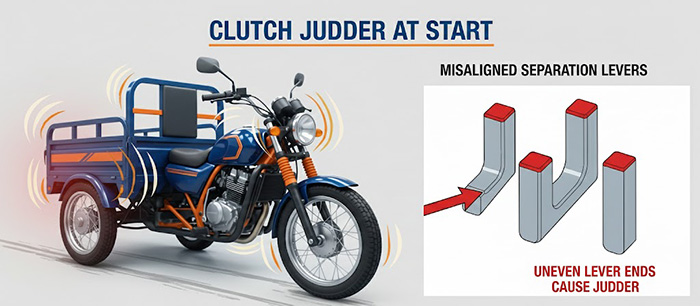
3. Clutch Judder or Shudder at Start
If your tricycle shudders or jerks violently when you start moving, it’s often a clutch-related issue.
Causes:
The separation levers are not adjusted to the same plane.
Poor contact or an improperly set gap on the friction plate.
Solutions:
Adjust the separation levers so their ends are perfectly aligned.
Readjust the friction plate to ensure proper contact and gap.
4. Overheating Clutch Bearings
A clutch or release bearing that is too hot to touch indicates a problem that needs immediate attention.
Causes:
Insufficient or degraded lubrication.
Excessive wear on the bearing or its contact surfaces.
Solutions:
Clean the bearing and repack it with fresh, high-temperature grease.
If components are worn, replace them and ensure proper gaps are set.
5. Abnormal Noises
Unusual grinding or whirring sounds from the clutch area are clear warning signs.
Causes:
A damaged or seized release bearing.
General clutch wear or lack of lubrication in the bearings.
Solutions:
Repair or replace the faulty release bearing.
Inspect the clutch assembly, clean components, and apply the appropriate lubricant.
Proactive Maintenance is Key
Many common clutch problems can be prevented with regular checks. Periodically inspect the clutch cable, check for leaks that could contaminate the plates, and ensure proper lubrication. Always refer to your tricycle's official manual for specific adjustment values and procedures. For complex issues, don't hesitate to consult a professional mechanic to avoid causing further damage.
By understanding these common faults, you can quickly diagnose issues, perform simple maintenance, and ensure your tricycle delivers reliable, smooth power for years to come.