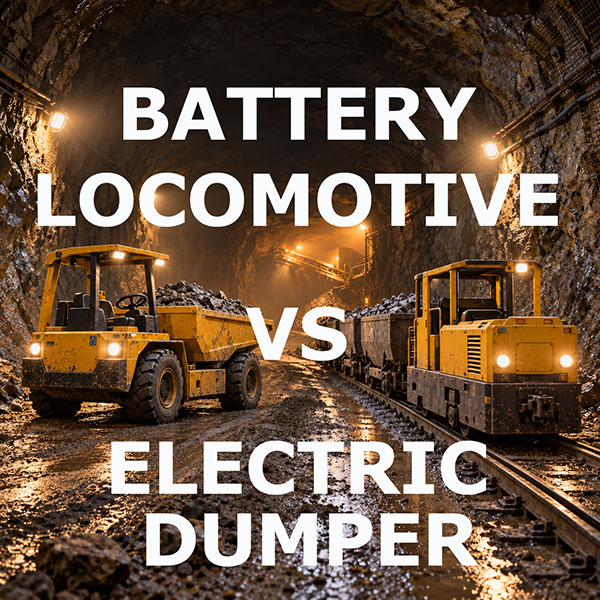
Welcome to Changsha Mining Equipment Co., Ltd.
How August 2026 Storms in Chile are Driving the Shift to Weather-Proof Underground Mining Haulage
The numbers from late August 2026 are stark. An atmospheric river slammed into Chile's high-altitude copper belt, dumping over 5 million cubic meters of snow on operations like Los Pelambres. The immediate fallout was severe: major producers, including Antofagasta and Lundin Mining, were forced to slash their annual production guidance by a combined 35,000 to 55,000 tonnes. The root causes were not ore-grade issues but the fragility of surface infrastructure—collapsed powerline towers, flooded open pits, and washed-out haul roads.
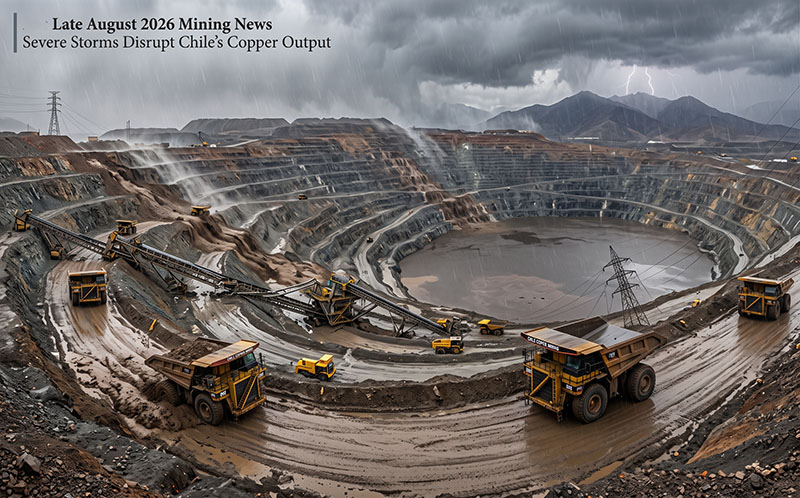
This scenario is not unique to the Andes. Just weeks earlier, a catastrophic mudslide at China's Xizang-Nepal border, triggered by a high-altitude avalanche, displaced an almost unimaginable 5 cubic kilometers of earth. That tragedy, which claimed lives and destroyed infrastructure, served as a humbling reminder of nature's power. As we noted in our reflections on that event, global warming is rapidly thawing permafrost—the "glue" that holds steep, fractured peaks together—turning them into ticking time bombs of loose rock and water.
These two events, occurring thousands of miles apart, share a common warning for the global mining industry: climate change is making high-altitude surface mining increasingly unpredictable and vulnerable.
The Logical Shift: Taking Core Extraction Underground
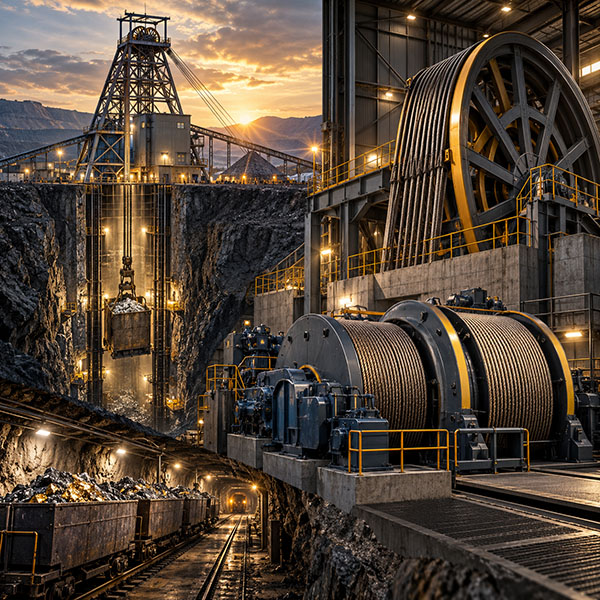
For mines operating above 4,000 meters, the conclusion is becoming inescapable. While open pits are fully exposed to mudslides, blizzards, and infrastructure washouts, underground operations are physically isolated from surface weather chaos. By shifting the focus to underground drifts, mines can decouple their core extraction activities from the turmoil above.
However, this strategic shift brings its own engineering challenge. Moving operations underground requires a transport system that doesn't rely on vulnerable surface road networks or diesel fuel, which creates ventilation hazards in confined spaces. The answer lies in a proven, weather-proof solution: track-based electric haulage.
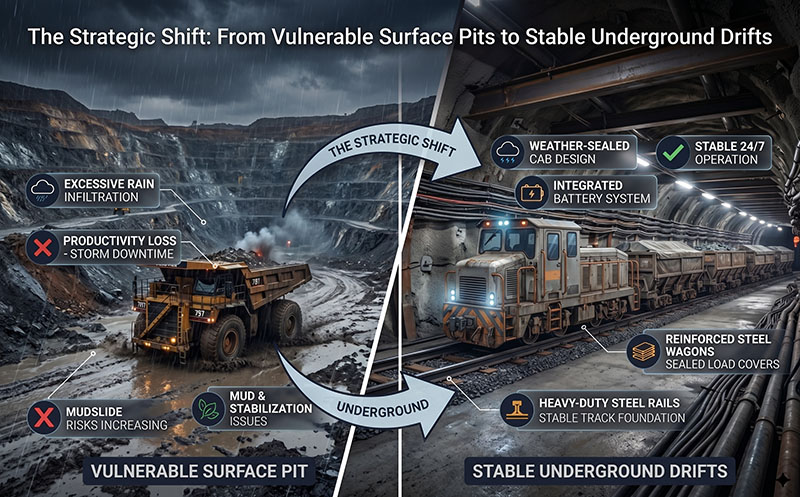
The Weather-Proof Haulage Solution: Battery-Electric Locomotives on Steel Rails
In the closed environment of an underground tunnel, a rail-bound system creates an independent "inner loop" for material transport. Unlike rubber-tired trucks, it is immune to mudslides and heavy snow above ground. The key to its resilience lies in its power source. A Battery Electric Locomotive offers reliable traction independent of surface grid fluctuations—the very fluctuations that brought Chilean mines to a halt when power towers collapsed. Furthermore, battery power eliminates exhaust emissions underground, dramatically improving air quality and reducing ventilation costs, which is a critical advantage at high altitudes where oxygen is already thin.
When coupled with heavy-duty Mine Wagons and robust Steel Rail, this system forms a high-tonnage, low-friction transport loop. It ensures a continuous, unbroken flow of ore from the working face to the hoist or primary crusher. While the specific locomotive or rail specification depends on your mine's tonnage and gradient—with options available for traction effort, battery capacity, and rail gauge—the fundamental principle remains: a properly designed rail system works day and night, regardless of the weather outside.
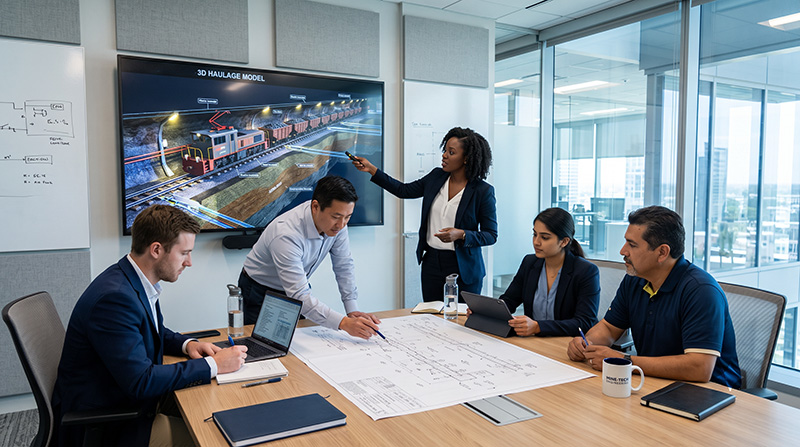
Securing Your Operation Against Future Climate Risks
The production cuts in Chile are a financial wake-up call. The tragedy in the Himalayas is a stark warning of what can happen when we underestimate nature's force. For procurement managers and mine operators, the message is clear: the era of relying on weather-exposed surface haulage for critical high-altitude operations is ending.
As we process these events, we are reminded that mining must be conducted with unwavering respect for the mountain. The ground we tunnel into today is not as stable as it was a decade ago. Therefore, we must build resilience into our core infrastructure. Upgrading to a battery-electric, track-based haulage system is not merely a technical upgrade; it is a strategic investment in operational stability and risk management.
If the events of August 2026 have prompted you to review your own operation's vulnerability, we invite you to contact our engineering team. With over 14 years of experience in challenging environments, we can help you design a customized locomotive and mine wagon track system that ensures your ore flow remains consistent—no matter what the weather brings.
Sabrina He | Mining Machinery Specialist
With over 14 years of experience in the mining equipment industry, Sabrina He specializes in machinery selection, technical troubleshooting, and plant optimization.