Welcome to Changsha Mining Equipment Co., Ltd.
The Unseen Crisis: How Middle East Supply Chain Disruptions are Choking African Copper Mines
As regional tensions in the Middle East escalate, the Strait of Hormuz – one of the world’s most critical maritime chokepoints – has seen shipping activity crippled. Headlines have focused understandably on the global fertilizer market panic: sulfur, the backbone of phosphate fertilizer production, is suddenly stranded.
But there is another, equally alarming, casualty thousands of miles away that few are talking about. African copper mining operations, already grappling with logistical bottlenecks, now face a supply chain shock so severe it threatens to bring entire mine sites to a standstill.
The link? A chemical reagent few outside the industry ever think about: sulfuric acid. The unfolding Middle East sulfur shortage is directly pulling the plug on Zambia’s copper supply chain, revealing a hidden vulnerability at the heart of the global energy transition.
The Middle East Bottleneck: A Global Sulfur Superpower Paralyzed
The Middle East isn’t just about oil; it is the undisputed heavyweight of global sulfur supply. According to S&P Global data from March 2026, the region accounts for roughly half of the world’s sulfur exports, much of it recovered as a by-product from natural gas processing.
In a normal year, over 46 million tonnes of fertilizers and sulfur-based raw materials transit through the Strait of Hormuz. Now, that artery is severely constricted. Vessel diversions, soaring war-risk insurance premiums, and outright route avoidance have slashed accessible tonnage.

The market response has been swift and protectionist. Nations that usually re-export sulfuric acid or sulfur – think Turkey, and even China – are clamping down on outbound shipments to safeguard domestic agricultural input supply. Spot sulfur prices have spiked, but more critically, physical availability has evaporated. For buyers in East and Southern Africa, who are entirely dependent on seaborne imports, the message is clear: the Middle East bottleneck has become a full-blown procurement crisis, and there is no short-term alternative source that can fill the gap.
The Chemical Link: Why Do Copper Mines Need Sulfur?
To understand why this crisis is so existential for African copper mining, you have to look at the geology of the Central African Copperbelt. Nations like Zambia and the Democratic Republic of Congo hold vast deposits of copper oxide ores – minerals that are relatively easy to treat chemically but unsuited to simple physical concentration. Extracting copper from these ores relies on a process called SX-EW, or Solvent Extraction and Electrowinning.
Here is where sulfuric acid becomes the irreplaceable lifeblood. In a typical SX-EW operation, crushed oxide ore is stacked in large heaps and sprinkled, or irrigated, with a weak sulfuric acid solution. The acid percolates through the ore, leaching out copper ions into a pregnant leach solution. This copper-rich liquid then goes through solvent extraction to purify it, and finally into an electrowinning tankhouse where pure copper cathode is plated onto stainless steel sheets.
Without that initial acid attack, the copper never leaves the rock. The role of sulfuric acid in this "sulfuric acid copper leaching" circuit is non-negotiable; there is no alternative reagent that can do the job at industrial scale and cost.
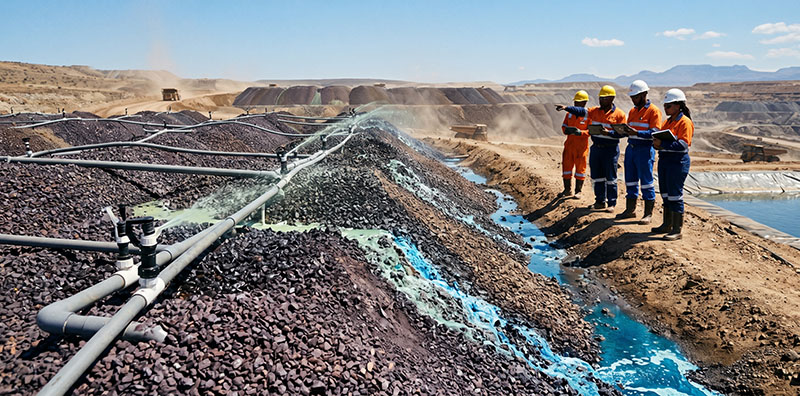
The equation, therefore, is brutally simple. The Middle East supplies the molten sulfur that coastal acid plants in countries like Tanzania convert into sulfuric acid. When Middle East sulfur shipments stop, those acid plants run out of feedstock. Without feedstock, no fresh acid is produced. Without fresh acid, the leach heaps dry up, the SX-EW plant starves, and copper cathode production grinds to a complete halt. The miner is left with a mountain of inert rock and a very quiet processing facility.
The Ground Reality for African Mining Operations
The vulnerability of African copper mining is amplified by an extreme import dependency. The continent has very few large-scale oil refineries or gas processing facilities that generate sulfur as a by-product, meaning over 90% of the sulfur and sulfuric acid consumed by the Copperbelt is imported from the Middle East. It arrives via the port of Dar es Salaam in Tanzania and then travels by road and rail deep into the interior – a supply line that is now stretched to breaking point.
Mine sites typically maintain only a few weeks of reagent inventory; acid is hazardous, hard to store in massive quantities, and expensive to keep on site. Across Zambia’s copper supply chain, stockpiles are already dwindling. Site managers are staring at a countdown clock. Once the acid tanks run dry, even if every haul truck, excavator, and generator is perfectly serviceable, the mine will have no choice but to declare a "Care and Maintenance" status – an operational halt that furloughs workers and freezes all associated procurement.
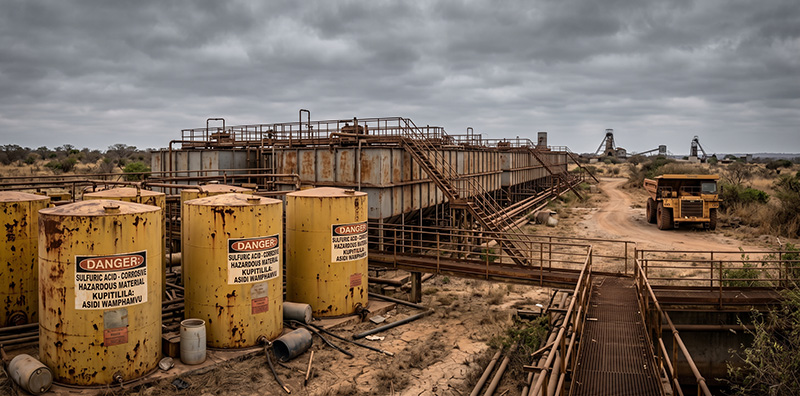
The ripple effects are immediate: logistics companies lose cargo, mining equipment suppliers see orders postponed, and local communities dependent on mining employment face a sudden loss of income. This is not a distant hypothetical; it is the ground reality unfolding in African mining operations right now.
Conclusion: Watching the Dominoes Fall
Sulfur, once dismissed as a low-value industrial by-product, has revealed itself to be a strategic chokepoint capable of choking the global supply of copper – the critical metal indispensable for electrification and renewable energy. The Middle East sulfur shortage, triggered by a geopolitical storm far beyond Africa’s control, has exposed the fragility of the Zambia copper supply chain and the entire African copper mining sector that depends on it.
As a supplier connected to this ecosystem, we see no quick fix. Alternative shipping routes, onshore acid production investments, or immediate stockpile releases simply cannot materialize fast enough. For now, the only rational response is to monitor developments closely, support our mining clients where possible, and wait for the domino effect in the Strait of Hormuz to subside. In the meantime, the unseen crisis is rewriting the supply chain playbook for everyone.
Aizen Liu | Delivery Manager
I oversees our international supply chain, ensuring that heavy-duty mining equipment reaches your site safely and on schedule. From complex customs clearance to final delivery, I provides a seamless and hassle-free procurement experience for our global clients.