Welcome to Changsha Mining Equipment Co., Ltd.
Why Track Gauge is the First Question You Must Ask Before Buying a Mining Locomotive
You have just posted a video showcasing a robust, brand-new mining locomotive. The engine growls, the wheels spin, and the machine looks unstoppable. Within minutes, the comments pour in from your potential buyers in Peru, Zimbabwe, and Bolivia. Yet, amid the praise, one single question dominates the thread, overshadowing inquiries about horsepower or price: “What is the track gauge?”
If you are a mine manager or a procurement officer sourcing equipment, you know this isn't just a technical triviality. The track gauge is not merely a measurement; it is the "entry ticket" to your underground transport system. Getting it wrong doesn't just mean a bad purchase—it means a stranded asset. This article dissects why this specification is non-negotiable for mines in South America and Africa, and the astronomically high cost of guessing wrong.
The Engineering Reality: Why 10 Centimeters Matters
In the confined darkness of an underground drift, the relationship between the locomotive and the rock wall is a zero-sum game. The track gauge directly dictates the locomotive’s overall width and stability profile.
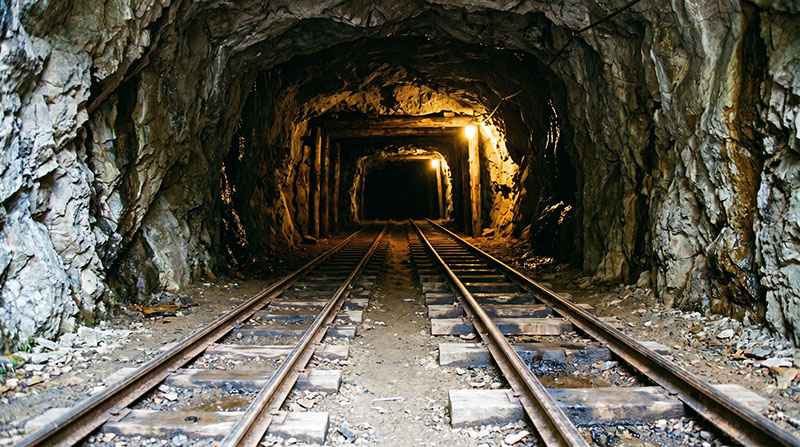
First, consider tunnel clearance. In the narrow-vein silver and zinc mines scattered across the Andes in Ecuador or Peru, development costs are astronomical. Mine owners do not have the luxury of "just widening the tunnel a bit" to fit a wider machine. A difference of 10 centimeters in locomotive width can turn a productive fleet unit into a collision hazard, scraping against the ribs and destroying ventilation walls.
Second is the turning radius. A narrow gauge, such as 600mm, allows the locomotive to articulate sharply, navigating the hairpin bends typical of older, organic mine layouts. While a wider 900mm gauge offers superior high-speed stability, it demands long, sweeping curves that simply do not exist in legacy mines.
Finally, there is the payload capacity trade-off. A wider gauge lowers the center of gravity, allowing you to pull heavier, larger ore cars. You gain tonnage but sacrifice flexibility. In underground mining, space is the ultimate luxury, and your track gauge determines how you spend it.
Colonial Legacy Meets Real-World Needs: South America & Africa
Why do we see such a distinct regional divide in gauge preferences? The answer often lies buried in the colonial history of the mining districts, and the sheer cost of replacing "legacy infrastructure."
In South America (Peru, Bolivia, Ecuador):
The rugged topography of the Altiplano shaped the engineering logic here. Many mid-tier polymetallic operations, particularly older silver, zinc, and lead mines, adopted the European metric standard. The 600mm narrow gauge reigns supreme. It was chosen for its maneuverability in complex terrain and the lower initial capital cost of drift development. For these operators, flexibility is not a preference; it is a geological necessity.
In Africa (Zimbabwe, Zambia, Tanzania):
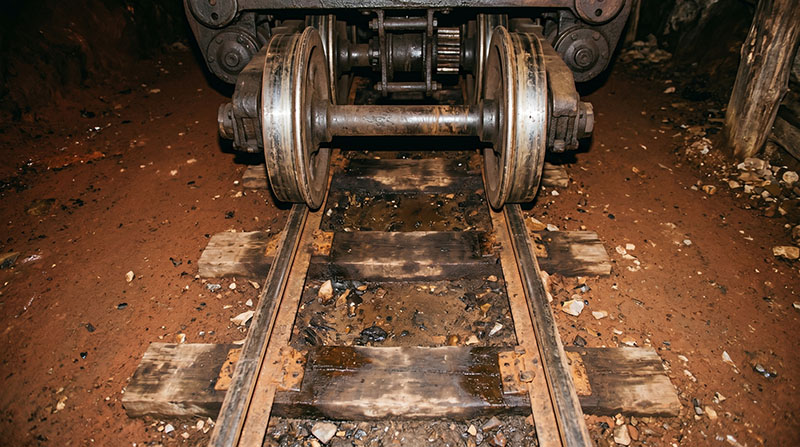
The influence is distinctly imperial. In Zambia’s Copperbelt and Zimbabwe’s prolific gold and chrome belts, the historical imprint of British engineering standards is still visible today. You rarely see pure metric systems; instead, you encounter the imperial relatives. The 762mm (2.5 feet) gauge is the workhorse, with 914mm (3 feet) also common in heavy-haul applications. These tracks have often been in place for over half a century. When a mine manager here buys a new loco, the top priority is "plug-and-play" compatibility. They are not ripping up kilometers of existing track.
The Buyer’s Survival Guide: Balancing Capacity and Constraints
Before you send out that RFQ (Request for Quotation), you must understand the trade-offs. There is no "superior" gauge, only the gauge that fits your existing asset. Use this quick reference when specifying your next locomotive:
600mm / 610mm: The champion of flexibility. Ideal for high-agility needs, legacy narrow-vein mines, and small cross-section tunnels. It’s the dominant choice for older Latin American assets.
762mm: The African compromise. It offers a sweet spot, balancing a decent payload capacity with a turning radius that doesn't require a cathedral-like tunnel.
900mm / 1067mm: The high-output specialist. Designed for modern, large-scale mechanized mines prioritizing maximum tonnage per trip. Reserved for projects with wide drifts and gentler curves.
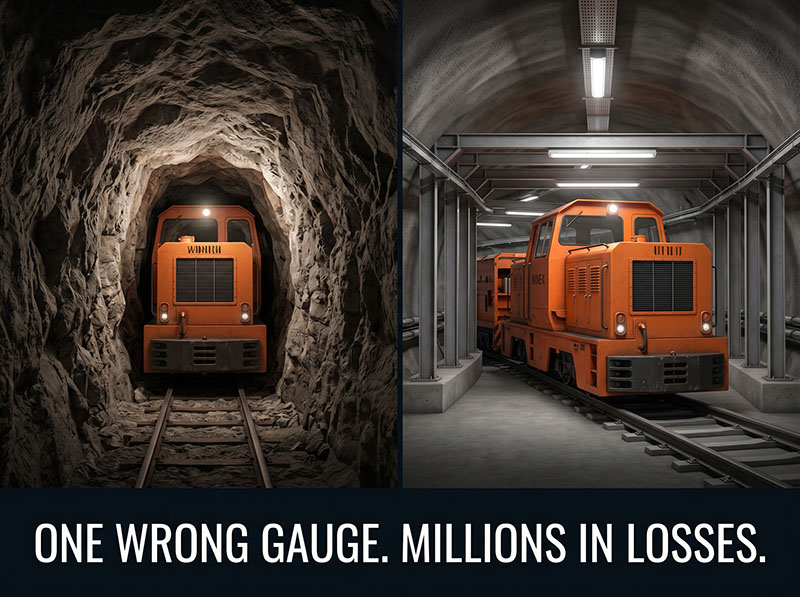
A critical warning: Do not just measure a single section of rail and place an order. Mine tracks suffer decades of wear. You must verify the back-to-back wheel distance at the turnouts (switches), as pinch points can derail a brand-new locomotive even if the straight-track gauge is technically correct.
Don’t Force Your Mine to Fit the Machine
A locomotive is a 15-year investment, but your underground rail infrastructure is a generational one. No manager wants to be the person who explains that the new fleet can't fit the mine entrance.
As a specialized trader deeply embedded in the South American and African markets, we understand that your Zimbabwean gold mine probably doesn't run on a standard European package, and your Peruvian silver drift requires the tightest tolerances. We don’t just supply stock from a warehouse. We offer standard 600, 762, and 900mm solutions, but our true expertise lies in customizing wheel sets to fit your exact legacy tracks.
Don't adapt your mine to the machine. Adapt the machine to your mine.
[Send us your tunnel dimensions and existing track gauge specs, and contact our engineers for a customized, drop-in solution today.]
Sabrina He | Mining Machinery Specialist
With over 14 years of experience in the mining equipment industry, Sabrina He specializes in machinery selection, technical troubleshooting, and plant optimization.