Welcome to Changsha Mining Equipment Co., Ltd.
The Point of No Return: Why Shutting Oil Wells Will Reshape Our World Forever
Date: March 19, 2026
In the past ten days, the unthinkable has accelerated into a tangible crisis. Since our last update on March 9, the situation in the Middle East has deteriorated further. The Strait of Hormuz remains a flashpoint, and the unthinkable—the forced, large-scale shutdown of oil production—is no longer a theoretical exercise. Iraq"s output has been slashed, Kuwait has activated force majeure, and storage facilities across the Gulf are hitting maximum capacity .
Many observers are watching the oil price, waiting for the conflict to pass. They assume that when the tankers start moving again, the oil will simply flow.
They are dangerously wrong.
We are not facing a temporary disruption. We are facing the potential for permanent, geological destruction of the world"s most critical energy assets. This is not a political opinion; it is a matter of petroleum engineering. Once Middle Eastern engineers are forced to close the valves on these giant fields, the world as we know it will change forever. Many of these wells will never come back online.
Here is the technical reality of why this crisis is different.
The Irreversible Trap: The Physics of "Never Again"
You cannot simply flip a switch on an oil well. It is a delicate, pressurized ecosystem. When you shut it down, you trigger a cascade of irreversible damage deep underground .
1. The Death of Pressure
An oil well is essentially a controlled leak from a high-pressure reservoir. The pressure forces oil through microscopic pores in the rock toward the wellbore. When you stop production, that pressure dissipates. In many mature Middle Eastern fields, which rely heavily on water or gas injection to maintain pressure, a shutdown allows the natural aquifer water to rush in—a phenomenon called "water coning" .
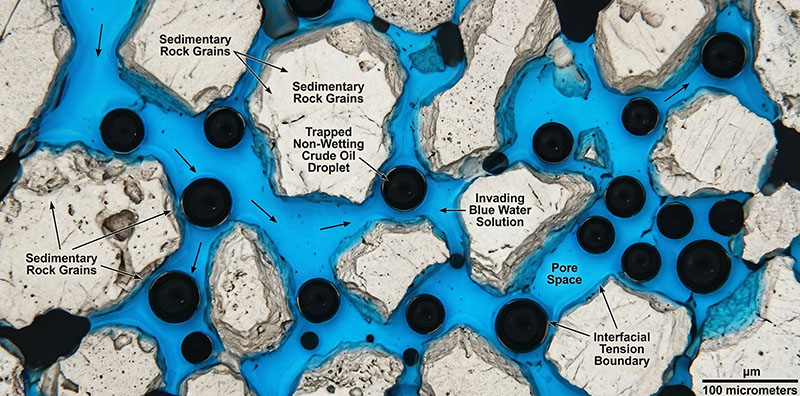
This water doesn't just sit there. It invades the oil-rich zones, trapping oil droplets in the pores through capillary action. As a U.S. regulatory document clearly states, damage to low-permeability reservoirs from repeated shut-ins is "irreversible and permanent," leading to lower ultimate recovery. Once the water moves in, the oil is locked in place forever.
2. Physical Blockage: The "Blood Clot" in the System
When production stops, the chemistry inside the well turns hostile.
Clay Swelling: Formation clays, stable under production, absorb water and swell, literally squeezing shut the pores that oil flows through .
The "Blood Clot": Heavy components like waxes and asphaltenes, kept fluid by the heat and movement of the oil, begin to cool and solidify. They form thick deposits inside pipelines and the wellbore itself—a "blood clot" in the world"s energy arteries—potentially turning multi-billion dollar infrastructure into scrap metal .
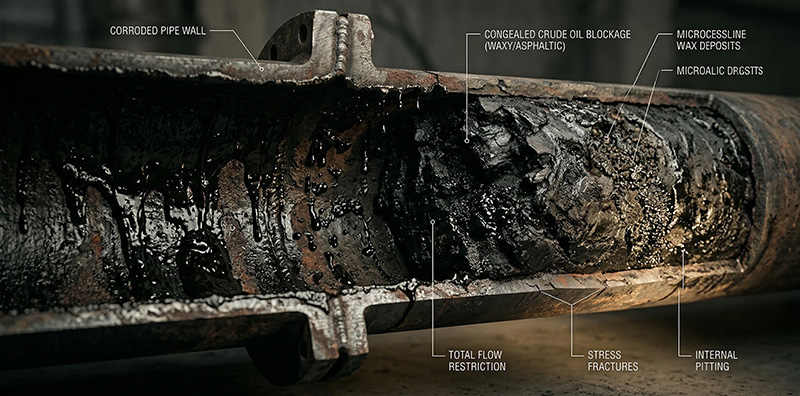
Fracture Collapse: In many fields, production relies on hydraulic fractures held open by tiny "proppant" particles. The pressure cycling of a shutdown can cause these particles to crush, causing the fractures to snap shut .
3. The Water Hammer Effect
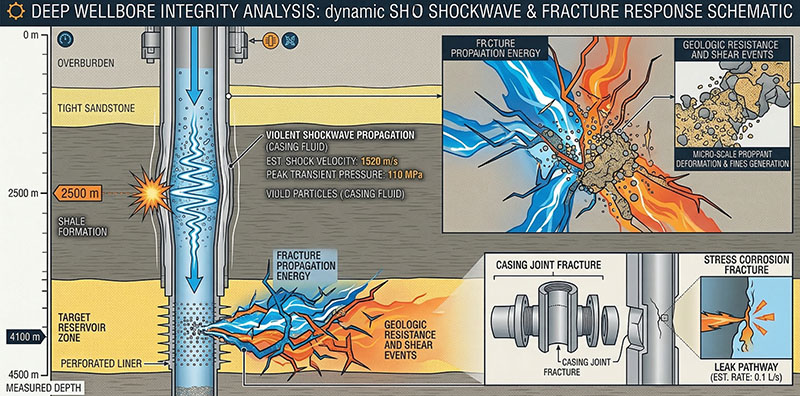
Shutting down a well isn't gentle. Emergency shutdowns can cause a "water hammer"—a violent pressure shockwave that travels down the well at the speed of sound . SPE research shows this cyclic hammering pressure can fracture the rock downhole, pulverize sand grains, and damage the cement bonding the well, leading to catastrophic sand production and mechanical failure when you try to restart .
Why the Middle East is a Ticking Time Bomb
The United States can shut down a shale well and, with work, sometimes bring it back. The Middle East is different. The super-giant fields are older, more complex, and many are reliant on a delicate balance of water flooding to push the oil out.
If that pressure balance is lost—if the aquifer water breaks through, if the pressure drops below the critical threshold—it is physically impossible to recover. You can spend billions trying, but the oil is gone. It is trapped in the rock by the very laws of physics. Low-permeability reservoirs require immense pressure to restart; once that pressure is gone, the "startup" pressure required becomes insurmountable .
The Unseen Danger: What Happens Next
The visible danger is today"s oil price. The invisible danger is tomorrow"s supply.
We are facing a potential supply shock that is not just temporary, but permanent. If major fields in Iraq, Kuwait, or even Saudi Arabia suffer significant formation damage due to a prolonged shutdown, we will not just lose oil for a few weeks. We will lose millions of barrels per day of production capacity forever.
This means:
Energy for mining and heavy industry becomes structurally more expensive.
The cost of raw materials—including the metals we mine—skyrockets.
The global economic order, built on cheap energy, must be rebuilt.
Conclusion
This is not a conspiracy theory. It is Petroleum Engineering 101.
Shut down a Middle Eastern oil field, and you risk destroying it forever.
We are not looking at a shortfall of days, but a permanent loss of millions of barrels of daily capacity.
Water coning, formation damage, clay swelling, and pressure collapse are irreversible.
As the situation in the Middle East worsens, we are not just watching a geopolitical crisis. We are watching the potential destruction of a non-renewable resource that our entire civilization depends on. Once those wells are closed, the world you knew—the price of fuel, the cost of goods, the global order—will change permanently.
About Us:
CSME is a leading supplier of heavy equipment for the mining and mineral processing industry. We understand that in a world of increasing scarcity, efficiency and reliability are everything. Contact us for your mining equipment needs.