Welcome to Changsha Mining Equipment Co., Ltd.
Rope-Operated and Ropeless Rock Loaders: How Early Designs Still Shape Mining Today
A few days ago, we shared a short video of a rock loader in operation. In the comments, one viewer raised a historical question:
“Gardner-Denver found that cogged rocker arms were unpopular with miners because they would get rock and dirt in the teeth and jam against the rigid guide track. How do you deal with this problem?”
To understand this issue, it helps to look at the early development of rock loaders, when two distinct design paths emerged — both of which still influence modern machines today.
Two Different Origins in Rock Loader History
In the early stages of underground mining mechanization, rock loaders (also known as pneumatic rock loaders, air loaders, or pneumatic shovels) developed along two main lines.
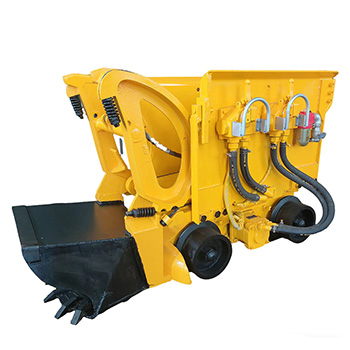
One approach was led by EIMCO, which introduced rope-operated rock loaders. These machines used steel wire rope and pulley systems to control the scooping and dumping motion. The design was mechanically simple and well suited to the dusty, abrasive conditions of underground mines.
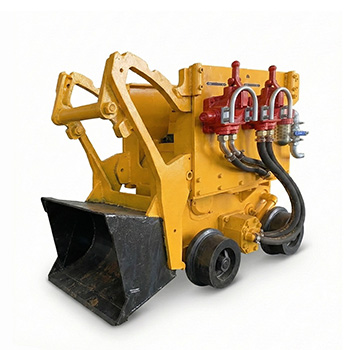
At roughly the same time, Gardner-Denver developed a ropeless (cableless) rock loader, replacing rope with cogged rocker arms and rigid guide tracks. The intention was to reduce rope wear and create a more direct mechanical drive.
Practical Experience Underground
In real mining environments, both designs proved workable — but in different ways.
Rope-operated pneumatic rock loaders demonstrated a strong ability to tolerate:
Fine rock fragments
Heavy dust
Mud and uneven ground conditions
Because rope systems have no exposed gear teeth, they were less sensitive to contamination and easier to maintain in confined headings.
Ropeless pneumatic loaders, on the other hand, offered a cleaner mechanical layout and eliminated rope inspection. However, early users observed that rock and dirt could enter the cogged mechanisms, leading to jamming if conditions were not well controlled. Modern ropeless designs have improved sealing and materials, reducing this risk in suitable applications.
Why Both Designs Still Exist
Today, both rope-operated and ropeless pneumatic rock loaders remain in use. The choice often depends on tunnel size, ground conditions, and maintenance preferences.
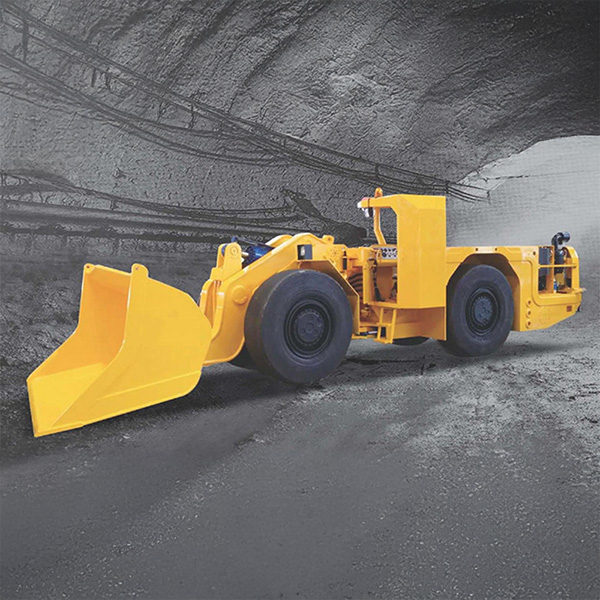
As a mining equipment supplier, we provide both types of machines, including small and mini pneumatic loaders / shovels customized for narrow tunnels. In practice, feedback from mining operations in Africa (Zimbabwe, Tanzania) and South America (Ecuador, Peru, Bolivia) shows that rope-operated designs are selected more often, mainly for their adaptability and long-term reliability.
That said, ropeless loaders continue to serve well in cleaner headings where mechanical precision is a priority.
Understanding the history behind these two designs helps explain why, even today, there is no single answer — only the right choice for the right conditions.