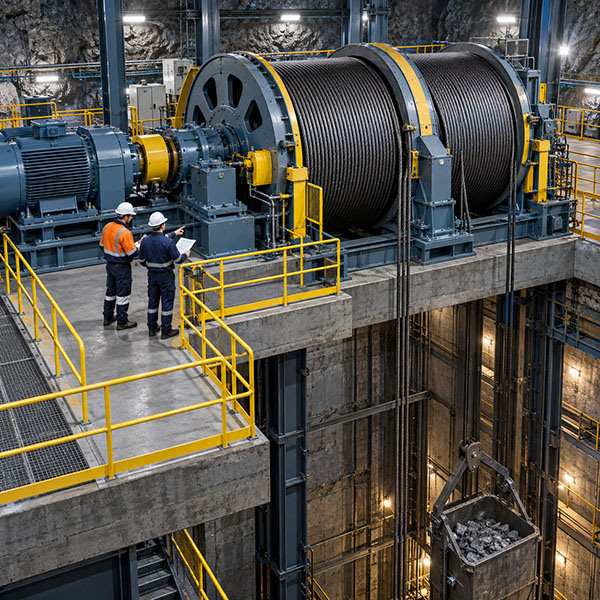
Welcome to Changsha Mining Equipment Co., Ltd.
Mining Transport Solutions: Shaft Hoisting vs. Tunnel Haulage
In mining operations, efficiently moving ore from the extraction point to the surface is fundamental to productivity and profitability. The two primary methods for this transport—shaft hoisting and tunnel haulage—serve distinct purposes based on the mine's specific characteristics. Understanding which system to implement depends on several critical geological and operational factors.
As a leading supplier of mining equipment, we provide comprehensive solutions for both vertical and horizontal transport needs.
Shaft Hoisting Systems: For Deep, Vertical Mining Operations
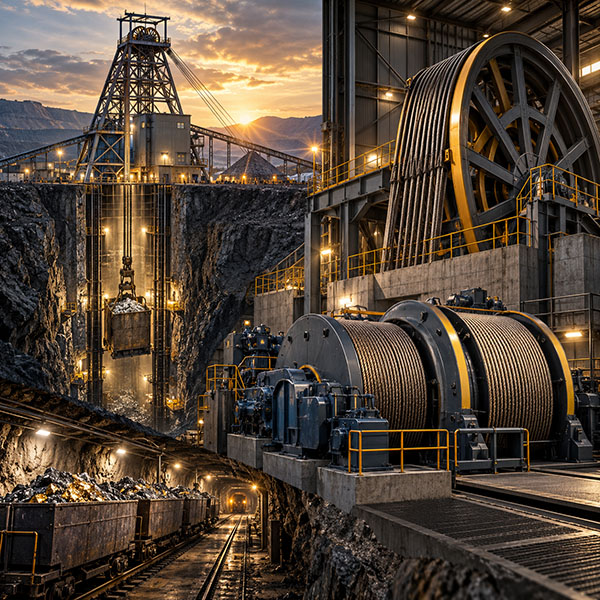
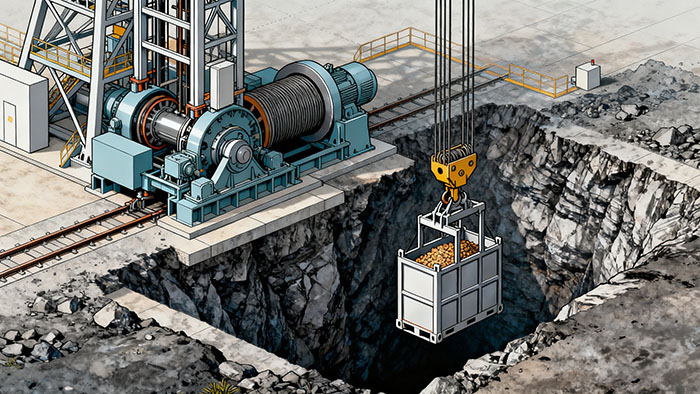
Shaft hoisting represents the most efficient solution for deep-level mining operations where ore bodies extend vertically downward. This method involves lifting materials directly to the surface through a vertical shaft, offering significant advantages for specific mining scenarios.
Our shaft hoisting equipment includes:
Multi-Rope Friction Hoists: Designed for deep mines requiring high-capacity lifting, these systems deliver powerful performance for heavy loads at great depths.
Single-Drum Winding Hoists: Ideal for medium and small-scale operations, these reliable hoists provide cost-effective vertical transport for shallower shafts.
Shaft systems prove particularly advantageous when the ore body is located deep underground (typically beyond 300 meters), where horizontal tunnel transport would become prohibitively long and inefficient. The vertical directness of shaft hoisting minimizes transport distance and energy consumption per ton of material lifted, making it economically superior for deep operations.
Tunnel Haulage Systems: For Horizontal and Shallow Mining Operations
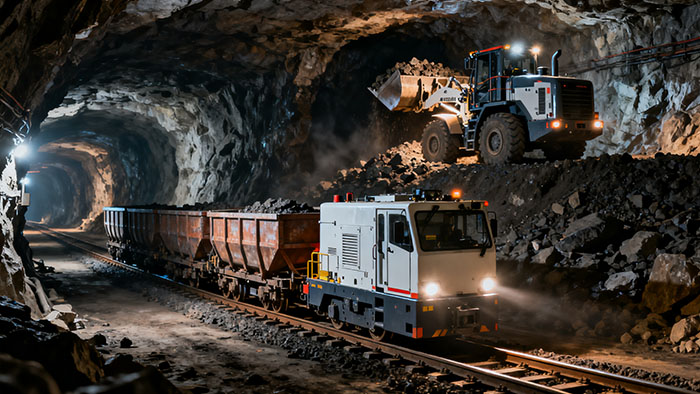
Tunnel haulage encompasses various ground-level transport methods that move materials through horizontal or inclined passages. This approach excels in situations where mines spread extensively horizontally rather than vertically.
Our tunnel transport equipment features three main categories:
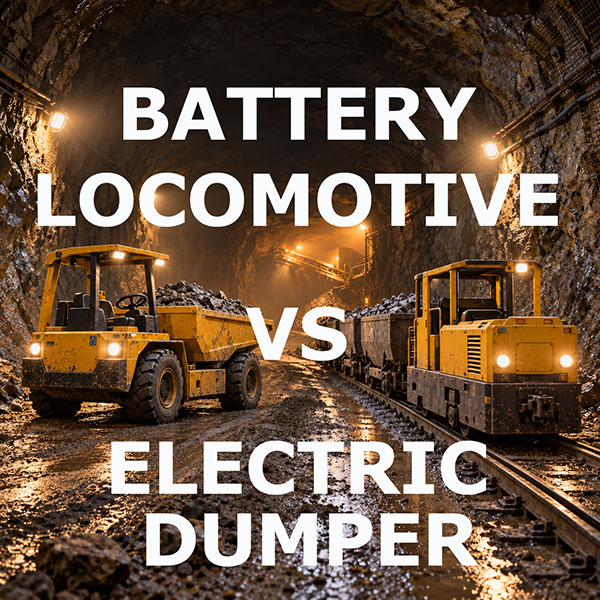
Locomotives: Available in battery, trolley, and diesel models, our locomotives provide reliable rail-based transport for operations requiring continuous material movement along fixed tracks.
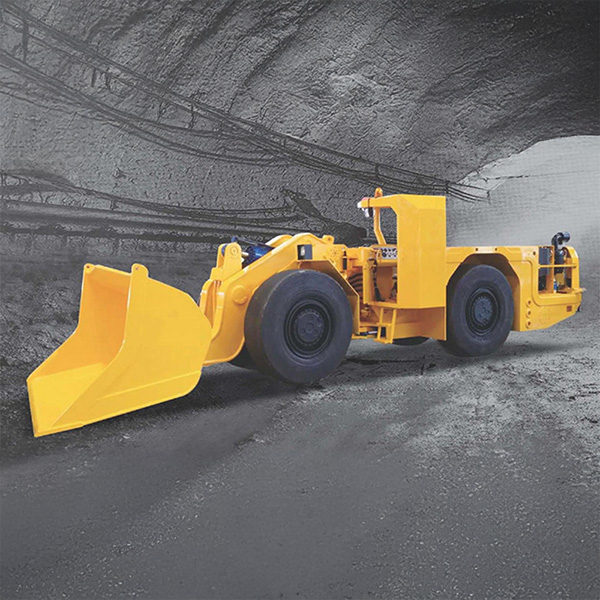
Loaders: Our loading equipment range includes Scooptrams (LHDs), rock loaders, and mucking loaders, designed to efficiently gather and transfer blasted rock and ore at the working face.
Dump Trucks: We offer both 4-wheel and 3-wheel mining dump trucks for flexible, rubber-tired transport of materials through mine tunnels and declines.
Key Factors Determining Transport Method Selection
The choice between shaft hoisting and tunnel haulage depends on several interconnected factors:
Depth and Geometry of Ore Body:
Shaft hoisting becomes increasingly necessary as mine depth increases. For ore bodies extending more than 300 meters vertically, the efficiency of direct vertical lift outweighs the initial infrastructure costs. Conversely, tunnel haulage proves more practical for shallow, horizontally extensive deposits where developing long declines or adits provides adequate access without the substantial investment of shaft sinking.
Production Scale and Operational Efficiency:
Shaft systems offer unparalleled efficiency in moving large volumes of material quickly from great depths. The continuous vertical flow enables high-tonnage production from a relatively small footprint. Tunnel transport, while potentially slower for deep operations, provides greater flexibility in accessing multiple working faces and adapting to changing mine layouts.
Geological Conditions and Infrastructure Requirements:
The surrounding rock mechanics significantly influence method selection. Stable geological conditions favor shaft construction, while fractured or water-bearing formations may make tunnel development more feasible. Additionally, tunnel systems generally require less sophisticated infrastructure for ventilation and cooling, particularly when using electric equipment, whereas deep shafts demand more complex environmental control systems.
Economic Considerations:
The decision ultimately balances capital investment against long-term operational costs. Shaft sinking requires substantial upfront investment but delivers lower operating costs for deep mines. Tunnel development typically involves lower initial capital expenditure but may incur higher ongoing transportation costs as mining progresses deeper.
Selecting the appropriate transport method requires careful analysis of these factors specific to each mining operation. Our expertise extends beyond equipment supply to providing technical consultation that helps miners optimize their transport systems for maximum efficiency and profitability, ensuring the right solution for your mining method and geological conditions.