Welcome to Changsha Mining Equipment Co., Ltd.
Why Low-Profile Mining Drifts Are Common in South America & The Perfect Solution
For mining operations across South America, from the rugged Andes to deep underground veins, space is often a critical constraint. It's not uncommon to encounter mining drifts and stopes with working heights of less than 2 meters. This specific challenge isn't a limitation of engineering but a smart adaptation to the region's unique mining realities. Understanding these reasons is key to selecting equipment that doesn't just fit, but thrives.
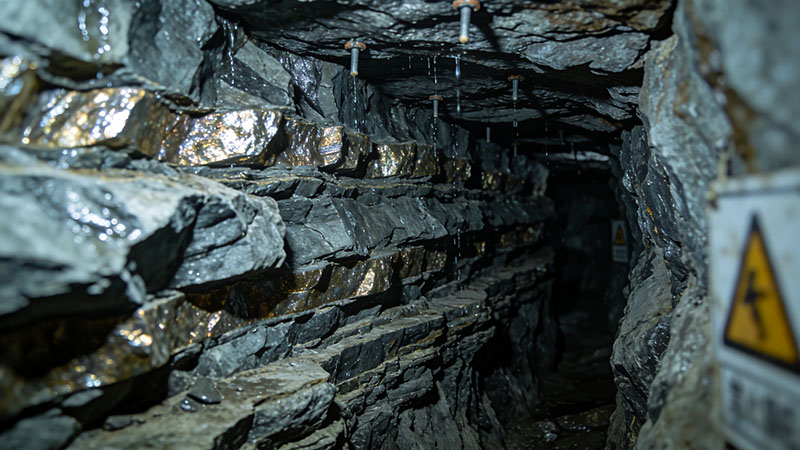
1. The Dictates of Geology: Following the Narrow Vein
South America is renowned for its rich, high-grade vein deposits of metals like gold, silver, and tin. These valuable ore bodies often form in narrow, steeply dipping seams or "veins" that can be as thin as 0.5 meters. To maximize ore recovery and minimize waste rock dilution, drifts are driven closely along the vein itself. Excavating a larger, taller tunnel in such geology would be economically inefficient and structurally unsound.
2. The Legacy of Historic Workings
Many mines in the region have been active for decades or even centuries. Initial development was often carried out with manual labor and small-scale methods, creating a network of legacy tunnels with limited dimensions. Modern operations expanding into these areas or using them for access must choose equipment that can navigate this existing, compact infrastructure.
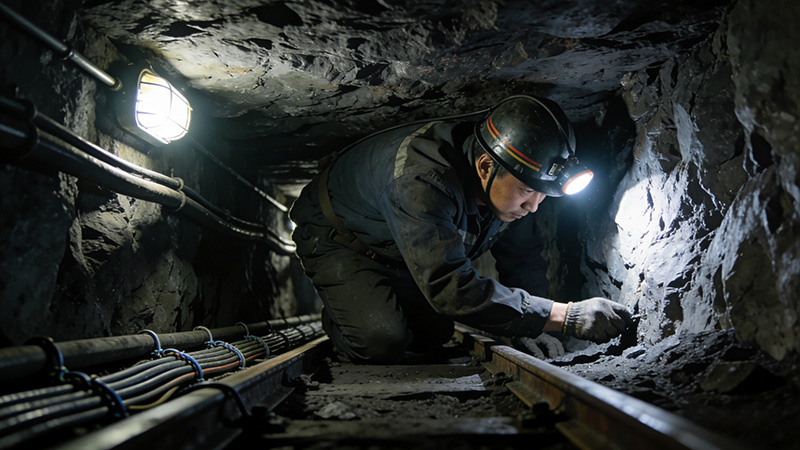
3. The Imperatives of Safety and Economics
In narrower ore bodies, driving a large cross-section drift increases development time, cost, and the amount of unstable ground that requires support. A compact, low-profile drift design reduces ground pressure, minimizes the need for extensive roof bolting, and lowers overall excavation costs. It is the optimal balance of safety, stability, and profitability.
Engineered for the Challenge: The ZQ-13 Pneumatic Loader
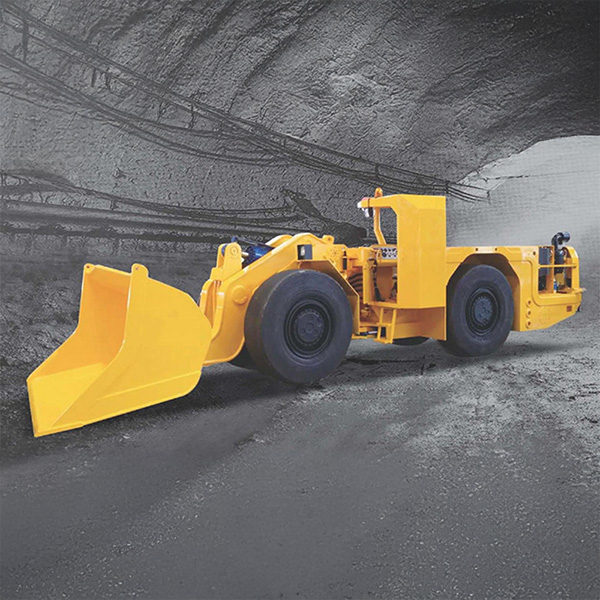
Meeting the demand for high-performance equipment in these confined spaces requires specialized engineering. Our ZQ-13 Pneumatic Loader is designed from the ground up to be the most efficient and reliable partner in low-height mining environments.
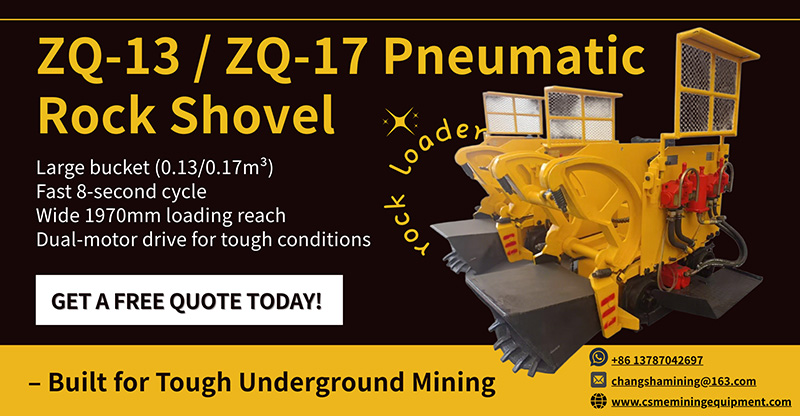
Its core advantage is its compact design. With a machine height of just 1,312 mm and a critical loading height of 1,866 mm, it operates effortlessly in drifts where other machines cannot enter. Powered by compressed air, it delivers zero exhaust emissions—a vital feature for ventilated indoor air quality—while its dual motors (12+15 kW) provide robust digging and tramming power. Built tough with a weight of 2,200 kg and 460 mm tires, it handles rough underground conditions with ease.
The ZQ-13 isn't just a loader; it's the right-sized solution for South America's distinctive mining landscape. If your challenge involves confined spaces without compromising on productivity, this is the machine for you.
Contact us today to discuss how the ZQ-13 can optimize your specific operation.