Welcome to Changsha Mining Equipment Co., Ltd.
Why Your Ball Mill Runs 24/7 (And Why Your Vibrating Screen Might Suffer)
In the world of mining, metallurgy, and cement production, "downtime" is a dirty word. Production lines operate with a relentless hunger, processing tons of material around the clock to meet demand. A typical configuration in these industries involves a wet ball mill working in tandem with a vibrating screen to classify and separate slurry. However, a recent customer case highlighted a critical mismatch in this partnership. While ball mills are engineered for strict, uninterrupted operation, the standard vibrating screens paired with them often hit their physical limits when forced to keep pace.
This article explores the technical necessity of continuous ball mill operation, why standard screens fail under this strain, and how we are solving this through immediate support strategies and innovative new product development.
The Ball Mill: Why Stopping is Not an Option
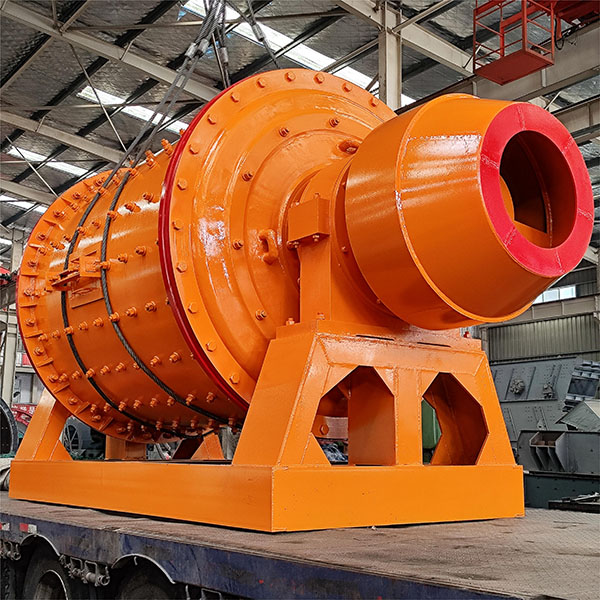
To understand the pressure on the screening equipment, you must first understand the ball mill. Inside a wet ball mill, a rotating drum uses heavy steel balls, water, and raw materials to create a fine slurry through continuous tumbling action. This process is designed to run non-stop. The primary danger of halting this machine is a phenomenon known as "caking." If the mill stops, the heavy steel balls and the dense slurry settle at the lowest point. Within a few hours, the slurry begins to solidify into a hard, cement-like mass around the balls.
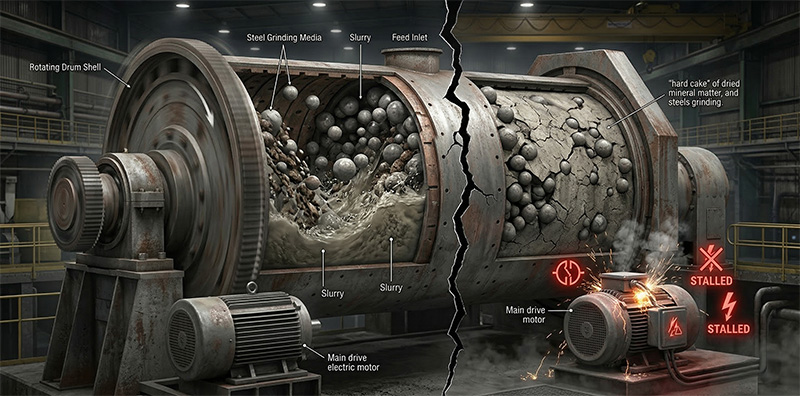
The real danger occurs at restart. Attempting to rotate a mill drum with a solidified bottom mass creates an extreme asymmetrical load. The motor must generate immense torque to overcome this dead weight, which often results in catastrophic failure—burning out the main motor, damaging the expensive reducer, or snapping the drive couplings. Therefore, 24/7 operation is not merely a matter of production quotas for ball mills; it is a strict technical necessity to avoid physically destroying the equipment.
The Vibrating Screen: The Hidden Victim of 24/7 Operation
Because the vibrating screen is positioned downstream to dewater and sort the mill discharge, it is forced to adopt the same grueling, non-stop schedule. This is where the conflict arises. In our recent customer case, a client integrated our standard-duty vibrating screen into a 24/7 circuit. For two months, it performed admirably. Then, the strain became evident. The screen began experiencing structural cracks and bearing failures, forcing an emergency shutdown that risked the entire mill's operation.
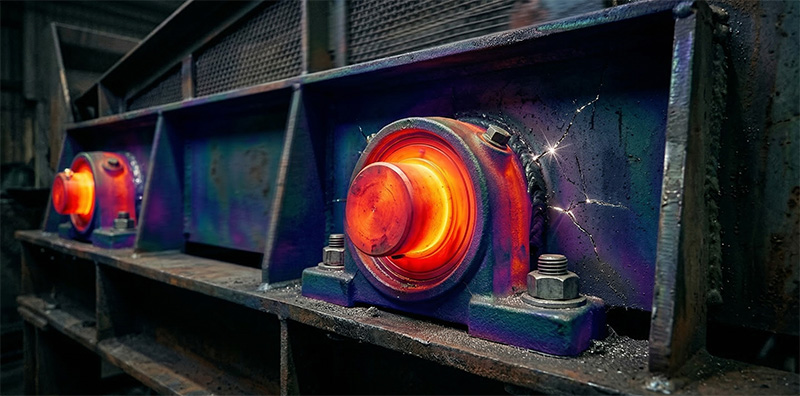
Why did it fail? Standard screens are often designed with intermittent use or standard shifts in mind, not the "always-on" reality of a continuous circuit. The technical toll is severe:
Metal Fatigue: Continuous high-frequency vibration, without rest, accelerates stress on welds and steel frames, leading to microfractures that propagate into structural cracks.
Bearing Overheating: Bearings are the heart of a screen. Running them 24/7 eliminates cool-down periods, causing grease to break down and leading to overheating and seizure.
Loose Fasteners: Constant vibration acts as a loosening agent. Without regular downtime for inspection, bolts and connections can work themselves free, exacerbating misalignment and wear.
Our Immediate Solution: Support and The "Duty-Standby" Strategy
When our customer faced this failure, we stepped up immediately. Our commitment to customer success meant dispatching replacement bearings and on-site support to get their operation running again. But we also provided a strategic recommendation to prevent future bottlenecks.
For clients who require 24/7 operation but currently utilize standard equipment, we strongly advocate for a "Duty-Standby" (1+1) configuration. This strategy involves installing two screens: one active, one on standby. By alternating the screens at regular intervals—for example, every 12 or 24 hours—one machine can "rest" while the other works. This creates a crucial maintenance window. The idle screen can be thoroughly inspected, bolts can be torqued, bearings can be re-lubricated, and wear parts can be checked without halting the ball mill. This simple operational shift prevents catastrophic failures and aligns the screen's duty cycle with the mill's.
Looking Forward: Engineering for the Extreme
We believe that equipment should be built for the environment it operates in. Listening to our customers' challenges is the cornerstone of our evolution. We don't just fix problems; we learn from them to innovate.
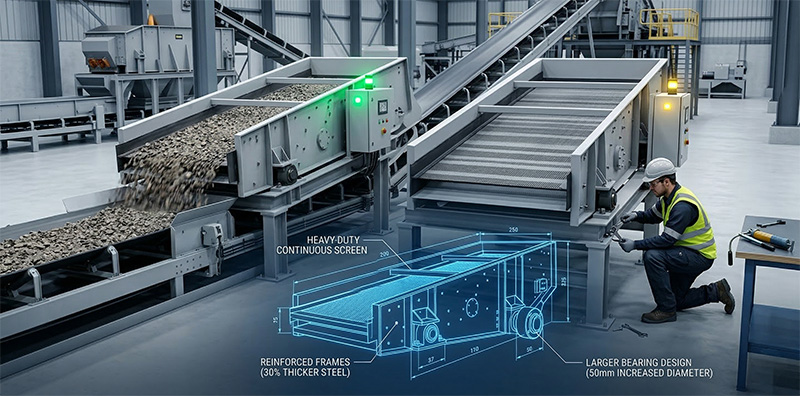
That is why we are excited to announce that our engineering team is currently developing a new product line: the Heavy-Duty Continuous Operation Vibrating Screen. Specifically engineered for the 24/7 demands of industries paired with ball mills, this new screen will feature significant upgrades. Customers can expect thicker steel plates, stress-relieved frames to combat metal fatigue, heavy-duty imported bearings designed for extended life, and automated lubrication systems to ensure maintenance never gets overlooked. This new range is being built to match the endurance of the ball mill itself.
Conclusion
Matching equipment durability to operational reality is the key to maximizing your return on investment. A production line is only as strong as its weakest component. If your ball mill demands 24/7 operation, your screening equipment must be able to survive it.
Is your vibrating screen struggling to keep up with your mill? Contact our engineering team today to discuss your specific production line requirements or to inquire about the upcoming launch of our Heavy-Duty Continuous Operation Vibrating Screen. Let’s build a solution that keeps your operation running without interruption.