Welcome to Changsha Mining Equipment Co., Ltd.
Overcoming the Andes: A Guide to Mining Equipment in High-Altitude Conditions
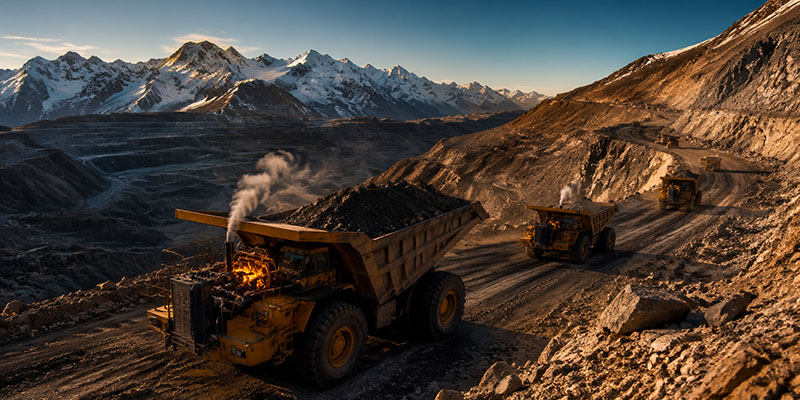
The spine of South America — the Andes — holds some of the world’s richest deposits of copper, gold, silver, and lithium. Mining operations in Peru, Chile, and Bolivia often sit at breathtaking altitudes between 3,000 and 5,000 meters above sea level.
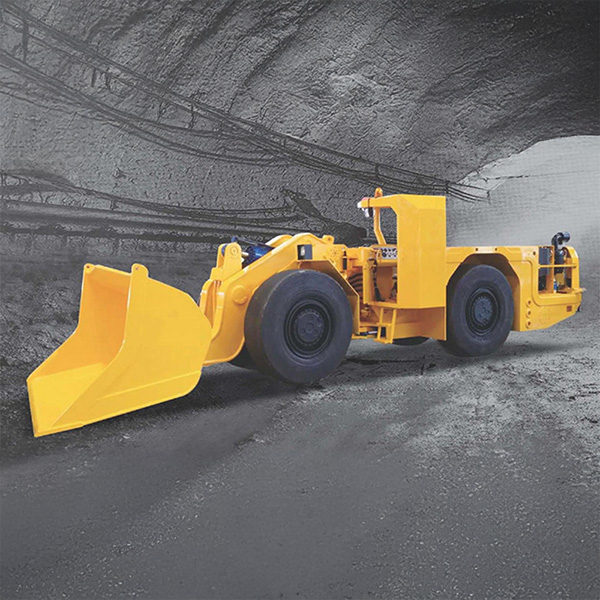
While the ore grades are rewarding, the environment punishes standard machinery. A scooptram or articulated dump truck that performs flawlessly at sea level can suffer dramatic power loss, overheat rapidly, or simply grind to a halt when it arrives at a high-altitude mine. This guide dives deep into how thin air attacks both diesel and electric mining equipment, explains the physics behind these failures, and gives you a clear procurement roadmap so you avoid costly mistakes when buying LHDs and dump trucks for the Andes.
The Physics of High Altitude: Why Thin Air is the Enemy
As elevation increases, atmospheric pressure drops. At 4,500 meters, air density is only about 60% of the sea-level value — the air is literally thinner, with fewer molecules packed into every cubic meter. For machinery, this creates two distinct threats. Diesel engines suffer from an oxygen deficit that chokes combustion. Electric motors, which don’t breathe, face a hidden cooling crisis because thin air is much less effective at carrying heat away. Let’s break down each case.
Diesel Mining Equipment (LHDs & Dump Trucks): The Oxygen Starvation Problem
Internal combustion engines require a precise mixture of diesel and oxygen to burn efficiently. At high altitude, the reduced oxygen mass in each intake charge causes incomplete combustion. The results are immediate and brutal: significant power loss (typically around 3% for every 300 meters of elevation gain), surging fuel consumption, heavy black smoke, and elevated exhaust temperatures. For a fully loaded underground dump truck climbing a steep ramp, this oxygen starvation can turn a capable machine into a smoke-belching liability that barely crawls.
This is not a subtle issue — it can mean the difference between hitting your production targets and suffering chronic underperformance. Standard sea‑level engines simply cannot pull their own weight up high. Fortunately, the solution lies in forced induction.
The Solution: Naturally Aspirated vs. Turbocharged Engines
A naturally aspirated engine relies on atmospheric pressure to push air into the cylinders. At 4,500 meters, with ambient pressure nearly halved, the cylinders receive far less air, starving the combustion process. These engines have no place on Andean mine sites.
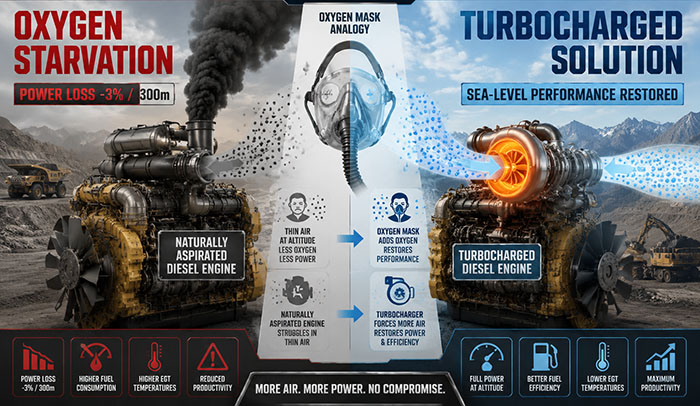
A turbocharged engine, in contrast, is a game-changer. A turbocharger acts like an oxygen mask for the engine, forcing compressed air into the cylinders just as a ventilator helps a climber breathe on Mount Everest. It uses exhaust gas energy to spin a turbine wheel, which drives a compressor wheel on the same shaft. The compressor squeezes the thin ambient air, increasing its density before it enters the engine. By packing more oxygen molecules into each charge, the turbo effectively offsets the altitude deficit and restores near sea‑level performance.
For high-altitude procurement, however, not all turbo engines are equal. You must specify a high‑altitude kit: a carefully matched turbocharger, an efficient intercooler to cool the compressed air, and a high‑pressure common‑rail fuel injection system that fine‑tunes the fuel map for low oxygen conditions. Insist that the engine manufacturer has validated the power curve and cooling capacity at the target elevation. A turbo that works in Santiago may run out of its effective range at 4,800 meters in southern Peru.
Electric Mining Equipment (Scooptrams): The Hidden Threat of Overheating
A common misconception is that electric LHDs are immune to altitude because they don’t burn fuel. It’s true that an electric motor delivers its full rated torque regardless of elevation — there is no power derate from thin air itself. However, this hides a critical danger: cooling failure.
Electric motors, variable frequency drives, and transformers generate substantial heat under heavy load. At sea level, a forced‑air cooling system easily carries this heat away because the dense air has a high thermal capacity and mass flow rate. As altitude increases, air density plummets. Even though the cooling fan spins at the same speed, the mass of air molecules flowing over motor windings and power electronics drops dramatically.
The result is that heat builds up faster than it can be removed. Motor winding temperatures climb, insulation degrades at an accelerated rate, and eventual burnout becomes a matter of when, not if. Many a standard electric scooptram has been shipped to a Bolivian mine only to suffer stator failure within weeks.
The Solution: Motor Derating and Advanced Cooling
The industry’s traditional fix is derating. A 100 kW electric motor is deliberately limited to perhaps 80 kW of continuous output at high altitude so that its heat generation stays within what the thin air can still dissipate. While derating prevents immediate failure, it shrinks your machine’s productivity and must be factored into cycle time calculations from day one.
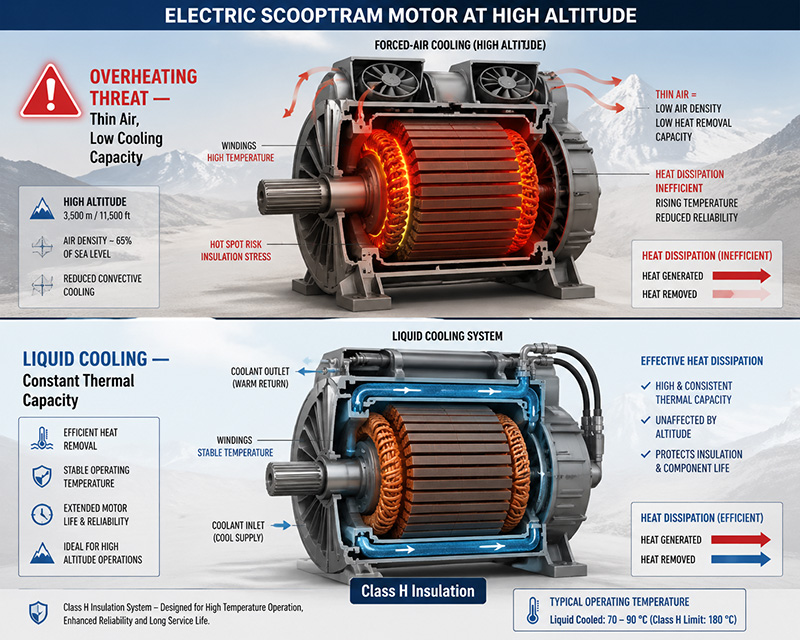
A more robust solution is upgrading the cooling system and insulation class. Specify Class H insulation, which allows a higher maximum winding temperature (typically 180 °C) and provides a larger safety margin. Even more effective is abandoning sole reliance on air cooling. Liquid‑cooled systems — where a water‑glycol circuit flows through motor housings and drives, then rejects heat via a radiator — use the high specific heat capacity of liquid to transport thermal energy. Because liquid cooling does not depend on air density to the same degree, it dramatically reduces the risk of overheating at altitude.
When buying electric scooptrams for mines above 4,000 meters, liquid cooling is not a luxury; it is a necessity. Always request the manufacturer’s altitude performance and cooling curves, and confirm the drive system has been tested at the targeted elevation.
Diesel vs. Electric: Which is Better for Your Andean Mine?
There is no universal winner — the decision depends on your mine’s infrastructure and ventilation strategy. Diesel LHDs and trucks offer lower upfront equipment cost and greater operational flexibility without the need for trailing cables or battery swapping stations.
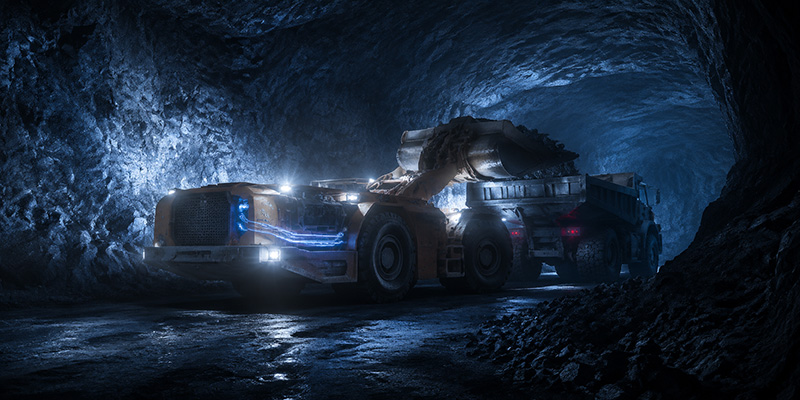
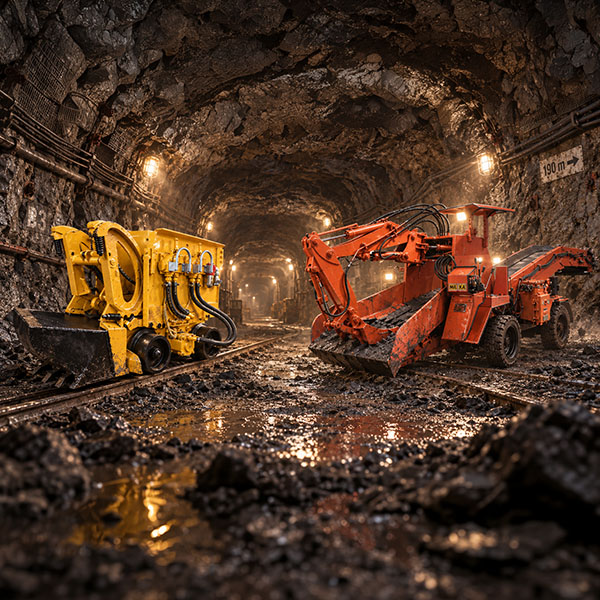
However, they generate exhaust gases. In high‑altitude underground mines, ventilation costs are magnified: the thin air forces ventilation fans to work harder to deliver the same mass flow of fresh air, and you need substantially more air volume to dilute diesel emissions. This can eat deeply into operational budgets. Electric scooptrams produce zero point‑of‑use emissions, drastically cutting ventilation requirements and long‑term energy costs.
The trade‑off is a higher initial capital outlay for the machine, plus the need for robust electrical infrastructure. Whichever path you choose, the non‑negotiable common denominator is altitude‑specific engineering. Never deploy a machine that hasn’t been modified for the site elevation.
Conclusion & Contact Us
Hauling standard mining equipment straight from the factory floor to a mine at 4,500 meters in Peru or Bolivia is a recipe for lost productivity, burned‑out motors, and smoking engines. Whether your operation demands a turbo‑breathing diesel dump truck or a liquid‑cooled electric LHD, customization is the key to performance and reliability in thin air.
Are you looking for reliable, high‑altitude‑ready Load Haul Dumpers or Dump Trucks for your South American mining project? We are a dedicated mining equipment trader with a deep network connecting specialized OEMs to demanding mine sites.
Our team understands both the engineering requirements and the procurement realities of high‑altitude operations. We source machines with the right turbocharging, cooling, and insulation packages proven to perform where the air is thin. Contact our team today for a consultation and let’s ensure your equipment breathes — and cools — exactly as it should.
Sabrina He | Mining Machinery Specialist
With over 14 years of experience in the mining equipment industry, Sabrina He specializes in machinery selection, technical troubleshooting, and plant optimization.